
Vocabulary activities for preschoolers are one of the most effective ways to support early language development and communication skills. During the preschool years, children are learning new words every day as they talk, listen, read, and explore the world around them.
Parents often wonder how to help their child build a stronger vocabulary at home. The good news is that children learn language best through play, conversation, and everyday experiences. Teachers in Garret Park, MD preschools often see that simple, interactive activities help children learn new words naturally while building confidence in communication.
Below are easy vocabulary building activities for kids that parents can try at home.

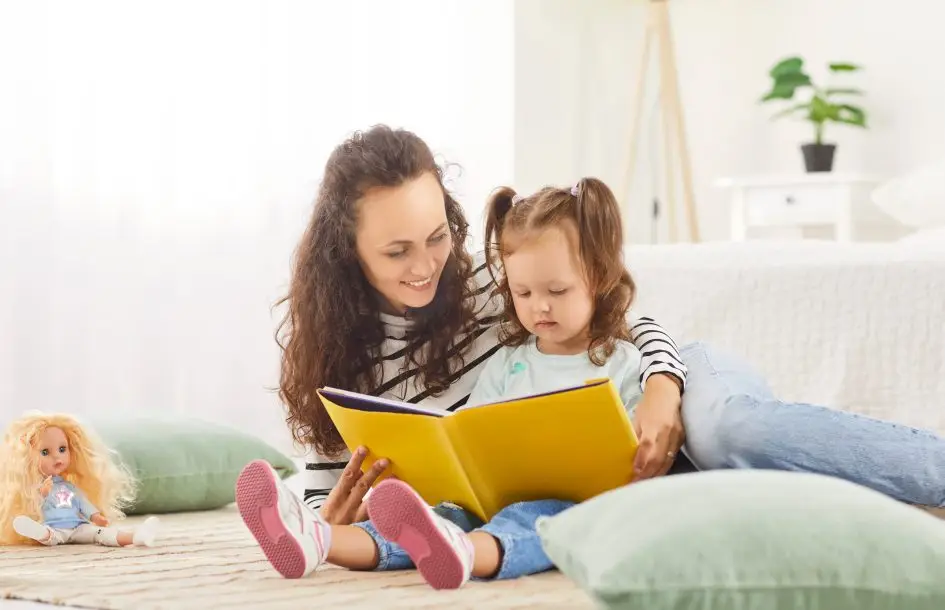
Reading together is one of the most powerful language development activities for preschoolers.
Instead of simply reading the words, pause to talk about what is happening in the story. Ask questions like:
These conversations introduce children to new words and help them understand how language works. If your child enjoys storytelling, you may also find helpful ideas by visiting Storytelling Activities for Preschoolers: Building Language and Imagination, which explores how stories can expand vocabulary and imagination.
Daily routines offer many opportunities for vocabulary building activities for kids.
For example, while cooking together you can introduce new words like:
During a walk, talk about what you see:
Educators in Garret Park, MD often encourage parents to describe everyday experiences because children learn language most effectively through conversation.

Picture description activities help children practice using new words.
Show your child a picture in a book or magazine and ask questions such as:
These early language development activities encourage children to observe details and express ideas clearly.
Teachers in Garret Park, MD classrooms often use picture discussions during group learning to help children practice speaking and listening.
Play is a natural environment for language learning.
When children play with toys, you can introduce new vocabulary by describing actions:
These vocabulary activities for preschoolers feel fun and engaging rather than structured or academic.
You can explore more ideas in our article on 7 Imagination Activities for Children, which highlights how pretend play supports language and creativity.
Songs and rhymes are excellent language development activities for preschoolers because they introduce rhythm, repetition, and new vocabulary.
Try:
Repetition helps children remember new words and understand how language patterns work. Learn more about why repetition supports early learning in: Why Repetition Is Important for Preschool Learning
Preschools such as those in Garret Park, MD often incorporate music and movement into daily routines because it strengthens both memory and communication skills.

Storytelling is another powerful way to build vocabulary.
Invite your child to describe:
Children practice organizing their thoughts and using descriptive words when they tell stories.
We’ve explored this idea further in our article on How to Build Problem-Solving Skills in Preschoolers (Parent Guide), which explains how storytelling and conversation support critical thinking.
One of the simplest ways to build vocabulary in young children is to ask questions that encourage longer responses.
Instead of asking:
“Did you have fun?”
Try:
“What was the most fun thing you did today? Why?”
Open-ended questions encourage children to think, explain, and use a wider range of vocabulary.
Strong vocabulary skills support many areas of development.
When children regularly participate in vocabulary activities for preschoolers, they strengthen:
Early language experiences help children feel comfortable participating in conversations, asking questions, and sharing their thoughts. With simple activities like storytelling, reading, singing, and conversation, parents can support early language development activities that help children grow into confident communicators.
For more ideas to help build vocabulary, visit:
MCCA has been recognized by the Maryland State Legislature for its commitment to Montgomery County issued a quality programs and special needs child care Proclamation in 2016 to MCCA for its commitment to Montgomery County child care for more than 50 years. MCCA was also selected as a 2018 nonprofit finalist for a MOXIE Award for boldness and innovation
MCCA is the oldest nonprofit licensed child care provider in Montgomery County and started its work in 1968 as a Community Action Project of the War on Poverty. Recognizing the need for quality child care programs in their neighborhoods, a group of local activists formed an association to establish centers in Montgomery County that would serve a diverse population and establish high standards for child care. Now, more than 50 years later, MCCA’s dedicated and expertly trained staff continue their tradition of providing high quality child care and play-based education for children.
Families with school aged children who can afford their child care expenses during the school year often struggle to afford the all-day programs they need when school is out for the summer. The Richard Krampf Summer Adventures Scholarship Fund was established to help provide children a safe and stimulating place to spend their weeks when school is out. Please contact an MCCA Director for details on how to apply.