
Repetition is key to preschool learning, helping children master skills and build confidence. When your child wants to read the same book or play the same game repeatedly, they’re practicing memory, language, and problem-solving in a way that feels fun and safe.
In early childhood education, repetition is not accidental, it is intentional, developmentally appropriate, and essential for growth.
Preschoolers’ brains are rapidly developing. Repetition in preschool learning strengthens neural pathways, helping children understand, remember, and apply new information more effectively.
Through repetition, children are able to:
Teachers in Garrett Park preschools often see how repeated routines and activities help children feel safe, capable, and ready to learn each day.

Repetition Helps Children Learn Through Practice
Preschool learning is hands-on and experiential. Children don’t master a skill the first time they try it, whether it’s counting, recognizing letters, or following multi-step directions.
Repeating activities such as puzzles, sorting games, and matching exercises strengthens problem-solving skills and supports cognitive growth. This aligns closely with strategies discussed in Strengthening Preschoolers’ Memory Through Everyday Play where repeated exposure helps children process information more deeply.
Over time, repetition turns effort into understanding.
Repetition Strengthens Memory and Recall
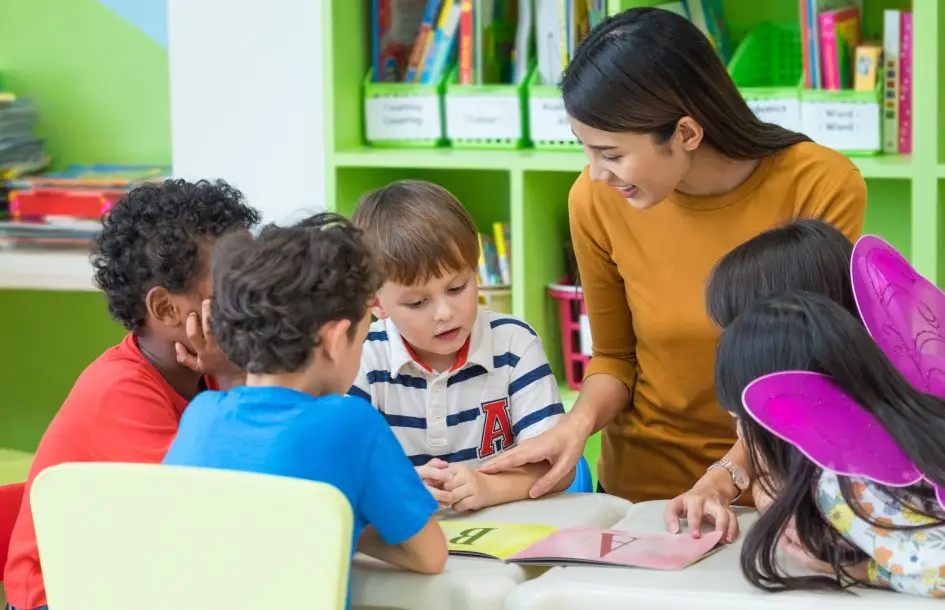
Memory development in young children depends heavily on repetition. Hearing the same story or song multiple times helps children anticipate what comes next, remember details, and eventually retell the information themselves.
This is why many preschool classrooms intentionally revisit favorite books and activities. Families can reinforce this at home by rereading familiar stories or revisiting favorite learning games, similar to the ideas shared in strengthening preschoolers’ memory through everyday play.
To learn more about memory development, see: Strengthening Preschoolers’ Memory Through Everyday Play.
Predictability Helps Children Feel Safe
Consistent routines and repeated activities give preschoolers a sense of control in a world that is still very new to them. Knowing what to expect helps reduce anxiety and supports emotional regulation.
Many Garrett Park preschools use repetition in daily schedules such as circle time, meals, rest, and play, because children thrive when their day feels predictable.
Repetition Builds Confidence and Independence
Each time a child successfully repeats an activity, their confidence grows. What once felt challenging begins to feel manageable and eventually easy.
Repetition allows children to:
This confidence carries over into social settings, problem-solving, and classroom participation.

Repetition Helps Preschoolers Learn Language Naturally
Language development relies heavily on hearing words and phrases over and over again. Repeated exposure helps children understand meaning, sentence structure, and vocabulary.
Activities such as:
All support early literacy skills. Parents interested in expanding these skills may also find value in Early Literacy in Preschool, which highlights how repetition builds a strong foundation for reading and writing.
Social Skills Grow Through Repeated Interaction
Preschoolers learn social skills by practicing them repeatedly: sharing, taking turns, listening, and cooperating. Group activities that happen regularly give children multiple opportunities to learn what works and what doesn’t. Over time, repetition helps children build empathy, patience, and stronger peer relationships.
Repetition doesn’t mean doing the exact same thing in the exact same way forever. Small variations can keep activities engaging while maintaining familiarity.
Parents can:
What matters most is consistency, not perfection.

It’s common for parents to wonder if repeated activities mean their child isn’t being challenged enough. In reality, repetition often signals that a child is actively working to master a skill.
As long as a child remains engaged, repetition is a positive sign of learning and development, not stagnation.
If a child begins seeking new challenges, that’s a natural next step and can be gently encouraged.
Repetition is intentionally built into high-quality early learning environments because it supports every area of development: cognitive, emotional, social, and physical.
Many Garrett Park preschools rely on repeated routines, activities, and learning experiences to help children feel confident, capable, and ready for future academic success.
Understanding the role of repetition in preschool learning helps parents embrace their child’s desire to revisit favorite activities, knowing each repetition builds skills that last far beyond the preschool years.
MCCA has been recognized by the Maryland State Legislature for its commitment to Montgomery County issued a quality programs and special needs child care Proclamation in 2016 to MCCA for its commitment to Montgomery County child care for more than 50 years. MCCA was also selected as a 2018 nonprofit finalist for a MOXIE Award for boldness and innovation
MCCA is the oldest nonprofit licensed child care provider in Montgomery County and started its work in 1968 as a Community Action Project of the War on Poverty. Recognizing the need for quality child care programs in their neighborhoods, a group of local activists formed an association to establish centers in Montgomery County that would serve a diverse population and establish high standards for child care. Now, more than 50 years later, MCCA’s dedicated and expertly trained staff continue their tradition of providing high quality child care and play-based education for children.
Families with school aged children who can afford their child care expenses during the school year often struggle to afford the all-day programs they need when school is out for the summer. The Richard Krampf Summer Adventures Scholarship Fund was established to help provide children a safe and stimulating place to spend their weeks when school is out. Please contact an MCCA Director for details on how to apply.