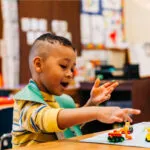

Storytelling activities for preschoolers do more than entertain. They spark creativity, build language skills, and help children understand the world around them. It encourages preschoolers to listen, imagine, and express their own ideas with growing confidence.
Families can easily turn everyday moments into storytelling adventures, laying the foundation for lifelong communication and a love of learning.
Storytelling is one of the most powerful tools for early learning. Each story told or imagined exposes preschoolers to rhythm, vocabulary, emotional understanding, and sentence structure. Listening teaches comprehension; speaking strengthens articulation and confidence.
Regular storytelling helps children:
Teachers at Garret Park preschools often find that when children engage in regular storytelling, at home or in class, they tend to speak more confidently, follow directions better, and show stronger empathy toward others. Through stories, children learn that words have meaning, ideas can be shared, and imagination is limitless.

Storytelling does more than build vocabulary. It supports the whole child by blending language, creativity, and emotional development:
Language Growth: Listening to and retelling stories helps children learn new words and sentence structures.
Imagination and Creativity: Stories encourage kids to picture settings, characters, and emotions.
Attention and Memory: Following a storyline teaches focus and sequencing.
Social-Emotional Learning: Through stories, children explore feelings like kindness, courage, and empathy.
Parents don’t need fancy tools to nurture storytelling. With a little creativity, everyday routines can become fun, language-rich experiences.
1. Tell “Once Upon a Time” Family Stories
Share stories from your own life or create silly family adventures together. For example, “Once upon a time, we went to the park and met a talking squirrel!” Encourage your preschooler to add ideas, choose characters, or decide what happens next. This builds narrative thinking and confidence in speaking.
2. Use Puppets or Toys to Act Out Stories
Dolls, stuffed animals, or finger puppets are perfect storytelling partners. Children can retell their favorite tales or invent entirely new ones.
At Garrett Park preschools, teachers often set up “story corners” with props and puppets that allow children to dramatize books they’ve read. This blends language practice with creative play.
3. Create Story Cards
Draw simple pictures (a sun, a cat, a house) on cards or sheets of paper. Then, have your child pick a few and make up a story using the images. This activity sparks imagination and teaches sequencing, which is an important literacy skill.
You can rotate themes seasonally, such as “winter adventures” or “garden stories,” to keep storytelling fresh and fun.
4. Encourage Picture Book Retelling
After reading a story together, close the book and ask, “Can you tell me what happened first?”
Retelling helps preschoolers organize thoughts, recall details, and practice expressive language. You can also invite your child to “read” the pictures in their own words.
For more literacy inspiration and how preschoolers in Garrett Park are introduced to literacy, check out our post on Early Literacy in Preschool: Activities That Help Children Learn to Read and Write
5. Make a Story Box or Bag
First, fill a small box or bag with random household items such as a spoon, a toy car, a block. Then, take turns pulling items out and adding them into a shared story. This unpredictable, silly format keeps preschoolers engaged while strengthening verbal creativity and flexible thinking.
6. Record or Illustrate Stories
Have your preschooler draw pictures that match their stories or record their voice as they narrate. Hearing themselves tell a story reinforces confidence and helps them see storytelling as a form of self-expression.
You can turn their stories into a “family storybook”, which can be meaningful keepsake that celebrates imagination and growth.

Imagination flourishes when children are free to explore ideas without limits. Storytelling invites them to visualize worlds, solve problems, and express emotions creatively.
Parents can nurture this by:
In Garrett Park early learning centers, teachers use open-ended storytelling prompts like “A box appeared on the playground, what’s inside?” to encourage creative thinking and collaboration.
Storytelling activities for preschoolers bring families closer while building language, imagination, and emotional growth. Whether it’s a bedtime tale, puppet show, or make-believe story about a rainy day, each story strengthens connection and communication.
For more creative literacy ideas, explore our posts on:
MCCA has been recognized by the Maryland State Legislature for its commitment to Montgomery County issued a quality programs and special needs child care Proclamation in 2016 to MCCA for its commitment to Montgomery County child care for more than 50 years. MCCA was also selected as a 2018 nonprofit finalist for a MOXIE Award for boldness and innovation
MCCA is the oldest nonprofit licensed child care provider in Montgomery County and started its work in 1968 as a Community Action Project of the War on Poverty. Recognizing the need for quality child care programs in their neighborhoods, a group of local activists formed an association to establish centers in Montgomery County that would serve a diverse population and establish high standards for child care. Now, more than 50 years later, MCCA’s dedicated and expertly trained staff continue their tradition of providing high quality child care and play-based education for children.
Families with school aged children who can afford their child care expenses during the school year often struggle to afford the all-day programs they need when school is out for the summer. The Richard Krampf Summer Adventures Scholarship Fund was established to help provide children a safe and stimulating place to spend their weeks when school is out. Please contact an MCCA Director for details on how to apply.