
Emotional vocabulary in preschoolers is one of the most powerful tools parents and teachers can nurture during the early years. When children learn how to identify and name their emotions, they gain confidence in expressing themselves, regulating feelings, and building stronger relationships. Everyday moments at home, on the playground, or in preschool classrooms, can become opportunities for teaching feelings to toddlers and helping them grow socially and emotionally.
Learning to put words to feelings is just as important as learning ABCs and numbers. When preschoolers have the words to describe how they feel, they are less likely to act out in frustration and more likely to solve problems with peers and adults.
Here’s why building emotional vocabulary matters:
With the right words, children can problem solve by asking for help or suggesting solutions.
At Garrett Park early learning programs, teachers often note that preschoolers who can name emotions like “frustrated,” “excited,” or “lonely” are more successful at navigating group activities and friendships.

Parents are children’s first teachers, and simple daily routines are full of opportunities to teach feelings to toddlers.
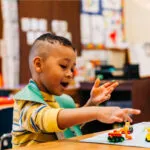
Narrate feelings during routines: “I see you’re smiling, are you feeling proud of your tower?”
Read picture books about emotions: Point out facial expressions and ask, “How do you think she feels?”
Use mirrors for self-reflection: Encourage children to look at their faces and practice naming “angry,” “happy,” or “surprised.”
Model your own emotions: Say, “I feel frustrated when we’re running late, but taking deep breaths helps me.”
Feelings flashcards: Show a card and ask your child to mimic the face or name the emotion.
Emotion matching games: Match expressions to real-life situations (e.g., “What makes you feel excited?”).
Art and drawing: Invite your preschooler to draw a “happy day” or a “sad face,” then talk about the emotions in their artwork.
These strategies help children make natural connections between language and emotions while reinforcing calm problem-solving. For more ideas that blend learning and fun, check out our post on Fun Weekend Learning Activities for Toddlers and Preschoolers.
Early learning programs, like those in Garrett Park, incorporate social-emotional learning into the day. Teachers use circle time, story discussions, and peer interactions to highlight feelings and solutions. For example:
When home and school partner together, children develop consistent tools for managing emotions in any environment.

A key part of teaching feelings to toddlers is showing them that all emotions are okay and it’s how we respond that matters. Parents can:
Acknowledge feelings: “You’re upset because your toy broke. That makes sense.”
Offer calm strategies: Suggest deep breaths, counting to five, or hugging a stuffed animal.
Reinforce positive labeling: Praise when your child says, “I’m mad” instead of yelling.
Stay patient: Avoid jumping in too quickly to “fix” the situation and let children practice expressing themselves first.
Educators in Garrett Park often observe that when children are encouraged to pause, name their feelings, and choose a response, classroom cooperation improves dramatically.
Building an emotional vocabulary for preschoolers is more than just teaching words, it’s teaching lifelong skills. Children who can name and manage their feelings are better prepared for friendships, learning, and future challenges.
By modeling emotions, encouraging naming practices at home, and partnering with early learning programs, families can help children grow into confident, empathetic problem-solvers.
Start with everyday moments, whether it’s identifying a smile at breakfast, naming frustration during a puzzle, or noticing a friend’s sad face at preschool. These small steps create big emotional growth.
For more ideas on early learning at home, check out our post on Teaching Patience to Kids Through Everyday Activities.
MCCA has been recognized by the Maryland State Legislature for its commitment to Montgomery County issued a quality programs and special needs child care Proclamation in 2016 to MCCA for its commitment to Montgomery County child care for more than 50 years. MCCA was also selected as a 2018 nonprofit finalist for a MOXIE Award for boldness and innovation
MCCA is the oldest nonprofit licensed child care provider in Montgomery County and started its work in 1968 as a Community Action Project of the War on Poverty. Recognizing the need for quality child care programs in their neighborhoods, a group of local activists formed an association to establish centers in Montgomery County that would serve a diverse population and establish high standards for child care. Now, more than 50 years later, MCCA’s dedicated and expertly trained staff continue their tradition of providing high quality child care and play-based education for children.
Families with school aged children who can afford their child care expenses during the school year often struggle to afford the all-day programs they need when school is out for the summer. The Richard Krampf Summer Adventures Scholarship Fund was established to help provide children a safe and stimulating place to spend their weeks when school is out. Please contact an MCCA Director for details on how to apply.