

Imagination activities are one of the most effective ways to support creativity, language development, and problem-solving during the early years. When children pretend, invent stories, or create their own games, they are doing much more than entertaining themselves. They are practicing essential cognitive and social skills.
Teachers in Olney, MD preschools often see that children who engage in imaginative play develop stronger communication abilities, confidence, and flexible thinking. Encouraging creativity at home doesn’t require complicated materials. Simple, open-ended activities can spark curiosity and help children explore ideas in meaningful ways.
To better understand the bigger picture behind these activities, explore:
Why Play Is Important for Preschoolers: 6 Ways Play Supports Learning
Below are several imaginative play activities for kids that parents can easily incorporate into everyday routines.
Storytelling is one of the simplest imagination activities for children. Invite your child to create a story using pictures, toys, or everyday objects.
For example:
These imagination games for kids strengthen vocabulary, listening skills, and narrative thinking. You can explore more ideas by visiting:
Storytelling Activities for Preschoolers: Building Language and Imagination

Pretend play encourages children to transform ordinary items into something new.
For example, a cardboard box might become:
Through this type of imaginative play activity for kids, children practice creativity and problem-solving while exploring different roles and scenarios.
We’ve explored this further in our article: How to Build Problem-Solving Skills in Preschoolers
Preschools such as those in Olney, MD often include dramatic play areas where children can pretend to cook meals, run a store, or care for dolls, all of which support social and language development.
Building imaginative settings allows children to create their own environments and stories.
As children design and adjust these environments, they practice planning, experimentation, and creative thinking.
Puppet play is another powerful way to encourage imagination.
Children can:
Puppet play supports emotional expression and communication. Children often use puppets to act out experiences or explore social situations.
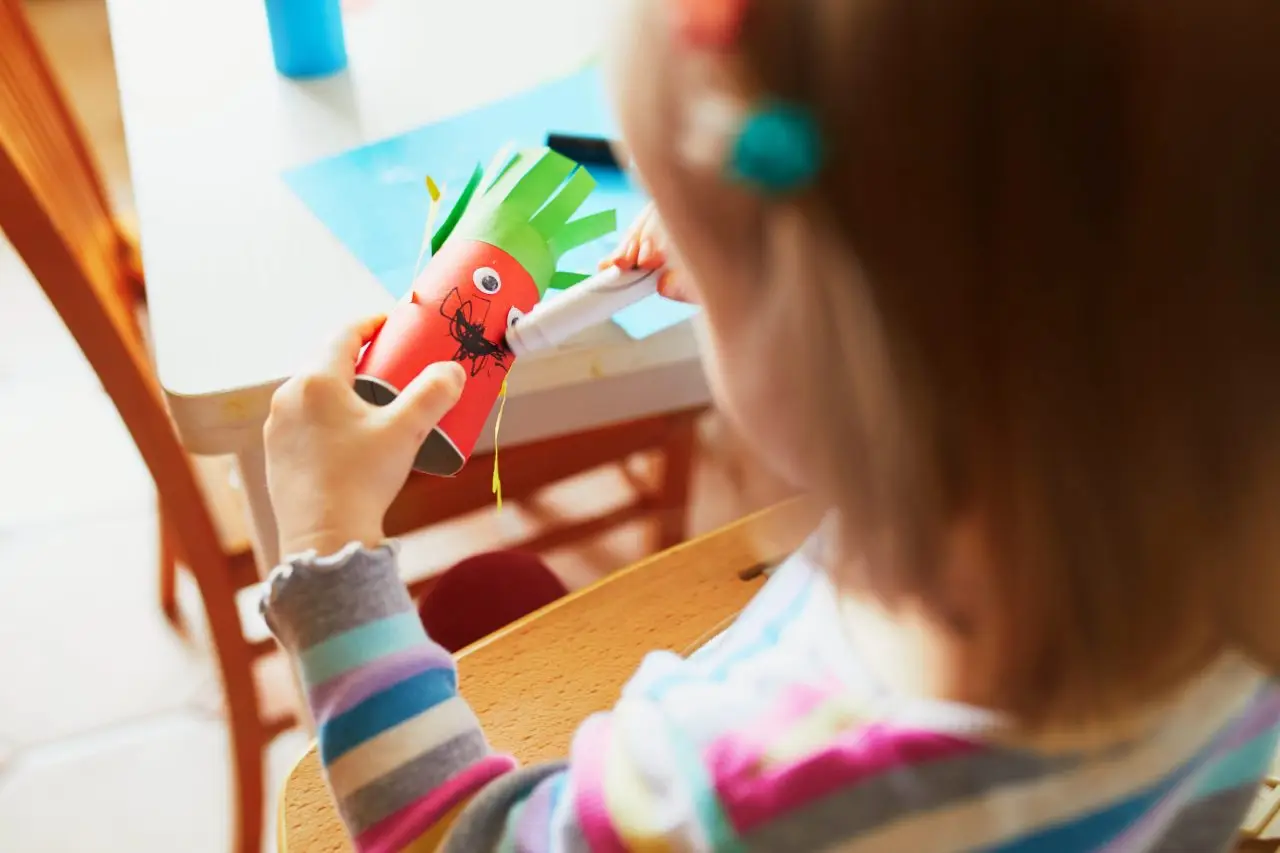
Open-ended art is a natural extension of imagination.
Instead of giving step-by-step instructions, allow children to experiment with materials such as:
Open-ended art encourages children to think creatively and make independent decisions. These creative activities for preschoolers also strengthen fine motor skills and confidence.
Teachers in Potomac, MD classrooms often notice that children who regularly engage in open-ended art become more comfortable expressing ideas visually.
Outdoor exploration can easily become an imaginative adventure and provides opportunities for children to practice problem-solving and observation.
During a walk, encourage your child to pretend:
These imagination games for kids combine movement with creative thinking, helping children stay engaged while exploring their environment.
Role-playing familiar experiences helps children process the world around them.
Children may pretend to be:
Through these imaginative play activities for kids, children experiment with communication, empathy, and social skills.

The benefits of imaginative play go far beyond entertainment. When children engage in creative play regularly, they strengthen many essential developmental skills, including:
Teachers in Potomac, MD preschools often observe that imaginative play allows children to explore ideas freely while practicing real-world skills in a safe environment.
Encouraging imagination through simple play experiences helps children develop curiosity, resilience, and creativity, skills that support lifelong learning.
For more ways to boost imagination, visit:
MCCA has been recognized by the Maryland State Legislature for its commitment to Montgomery County issued a quality programs and special needs child care Proclamation in 2016 to MCCA for its commitment to Montgomery County child care for more than 50 years. MCCA was also selected as a 2018 nonprofit finalist for a MOXIE Award for boldness and innovation
MCCA is the oldest nonprofit licensed child care provider in Montgomery County and started its work in 1968 as a Community Action Project of the War on Poverty. Recognizing the need for quality child care programs in their neighborhoods, a group of local activists formed an association to establish centers in Montgomery County that would serve a diverse population and establish high standards for child care. Now, more than 50 years later, MCCA’s dedicated and expertly trained staff continue their tradition of providing high quality child care and play-based education for children.
Families with school aged children who can afford their child care expenses during the school year often struggle to afford the all-day programs they need when school is out for the summer. The Richard Krampf Summer Adventures Scholarship Fund was established to help provide children a safe and stimulating place to spend their weeks when school is out. Please contact an MCCA Director for details on how to apply.