
Socialization in early childhood plays a major role in helping children develop the confidence, communication skills, and emotional awareness they need to thrive in kindergarten. While many parents focus on academic readiness, skills like sharing, listening, cooperating, and building relationships are equally important when children enter a classroom environment.
Through everyday interactions with peers and caring adults, children learn how to navigate social situations, express their needs, and become part of a group. These experiences create a strong foundation for both learning and long-term success in school.
Teachers in Potomac, MD preschools often notice that children who have regular opportunities to interact with peers tend to adjust more comfortably to kindergarten routines and classroom expectations.
Socialization in early childhood is the process through which children learn how to interact with others, understand social expectations, and develop relationships.
These skills begin developing long before kindergarten through experiences such as:

Many parents wonder whether their child has the right kindergarten readiness skills before starting school.
Teachers are often looking for abilities such as:
Children who have practiced these skills before kindergarten tend to feel more comfortable participating in classroom activities and building friendships. However, they are not expected to master every skill before kindergarten. Instead, educators look for a willingness to participate, learn, and engage with others.
You can learn more about preparing children for school in: Preschool Readiness Checklist for Potomac Families.
One of the biggest benefits of socialization is the development of language and communication.
When children interact with others, they learn how to:
These experiences strengthen both social skills for preschoolers and early literacy development.
We’ve explored this topic further in: How to Encourage Back-and-Forth Conversations in Preschoolers.
Friendships provide valuable opportunities for learning and growth.
Through peer interactions, children learn:
Children do not learn these skills through instruction alone. They develop them through repeated real-world experiences with other children.
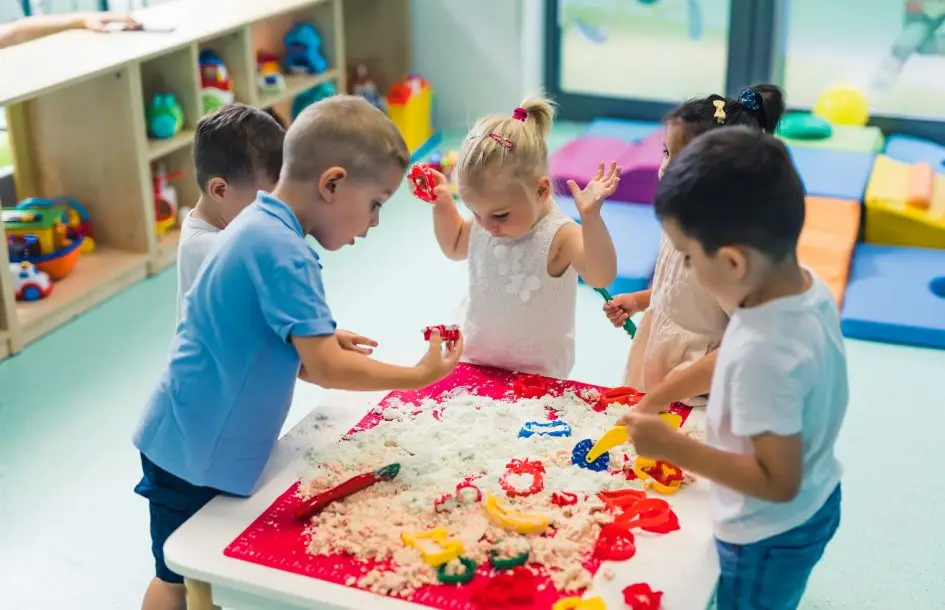
Preschools such as those in Potomac, MD often create opportunities for collaborative play because educators recognize how important peer relationships are to healthy early childhood development.

Learning to manage emotions is a critical part of kindergarten success.
Social situations naturally provide opportunities for children to practice:
While these situations can sometimes be challenging, they help children build emotional resilience over time.
Learn more in: How to Teach Emotional Regulation to Preschoolers: Simple Daily Strategies.
Parents can support social development through simple everyday experiences.
Some helpful opportunities include:
Even small social experiences help children build confidence interacting with others.
Educators in Potomac, MD notice that children often develop stronger social confidence when families provide regular opportunities for interaction and communication outside the home.
For young children, social and emotional skills often support academic success.
When children feel comfortable in a classroom environment, they are more likely to:
Strong socialization in early childhood helps create the foundation that allows academic learning to flourish.

Socialization is one of the most important ways children prepare for kindergarten and beyond. Through relationships, communication, and everyday interactions, children develop the confidence and social understanding they need to navigate new environments successfully.
By supporting socialization in early childhood, families help children build skills that extend far beyond the preschool years. These experiences strengthen communication, emotional awareness, cooperation, and confidence, all of which contribute to a smoother transition into kindergarten and a positive start to lifelong learning.
For additional reading, explore:
MCCA has been recognized by the Maryland State Legislature for its commitment to Montgomery County issued a quality programs and special needs child care Proclamation in 2016 to MCCA for its commitment to Montgomery County child care for more than 50 years. MCCA was also selected as a 2018 nonprofit finalist for a MOXIE Award for boldness and innovation
MCCA is the oldest nonprofit licensed child care provider in Montgomery County and started its work in 1968 as a Community Action Project of the War on Poverty. Recognizing the need for quality child care programs in their neighborhoods, a group of local activists formed an association to establish centers in Montgomery County that would serve a diverse population and establish high standards for child care. Now, more than 50 years later, MCCA’s dedicated and expertly trained staff continue their tradition of providing high quality child care and play-based education for children.
Families with school aged children who can afford their child care expenses during the school year often struggle to afford the all-day programs they need when school is out for the summer. The Richard Krampf Summer Adventures Scholarship Fund was established to help provide children a safe and stimulating place to spend their weeks when school is out. Please contact an MCCA Director for details on how to apply.