
Ways to teach preschoolers patience are something many parents search for when daily routines start to feel like constant negotiations. Waiting for a snack, taking turns with a sibling, or standing in line without melting down can feel like major challenges during the preschool years.
The good news? Patience is a learned skill. With consistent guidance and realistic expectations, children can build the ability to wait, manage frustration, and handle small delays with growing confidence.
Learning how to teach preschoolers patience supports:
Children who can tolerate small delays are more prepared for group settings, classroom routines, and social interactions.
Parents in Silver Spring often notice that when patience is practiced consistently at home and reinforced in preschool environments, children grow more confident and cooperative over time.
Preschoolers cannot jump from “right now” to “in 20 minutes.” Patience develops gradually.
Start small:
Teachers in Silver Spring preschools often begin with brief, predictable wait times and slowly extend them. Small successes build trust and confidence.
Instead of saying “Just wait,” give structure to the waiting.
Try:
Clear language reduces anxiety. If your child struggles with listening during these moments, you may find helpful insights in our article: Why Some Children Struggle with Listening and How Parents Can Help.
One of the most effective ways to teach preschoolers patience is through play.
Board games, simple card games, or even rolling a ball back and forth naturally encourage waiting. Because the rules are clear, children understand that waiting is part of the game, not a punishment.
Educators in Silver Spring schools often use structured play to reinforce turn-taking in a low-pressure way.
Children learn by watching. Modeling calm behavior teaches emotional regulation more effectively than correction alone.
Say things like:
If frustration escalates quickly, our article Why Kids Get Frustrated When Learning (And How to Help) explores how emotional regulation connects to patience.
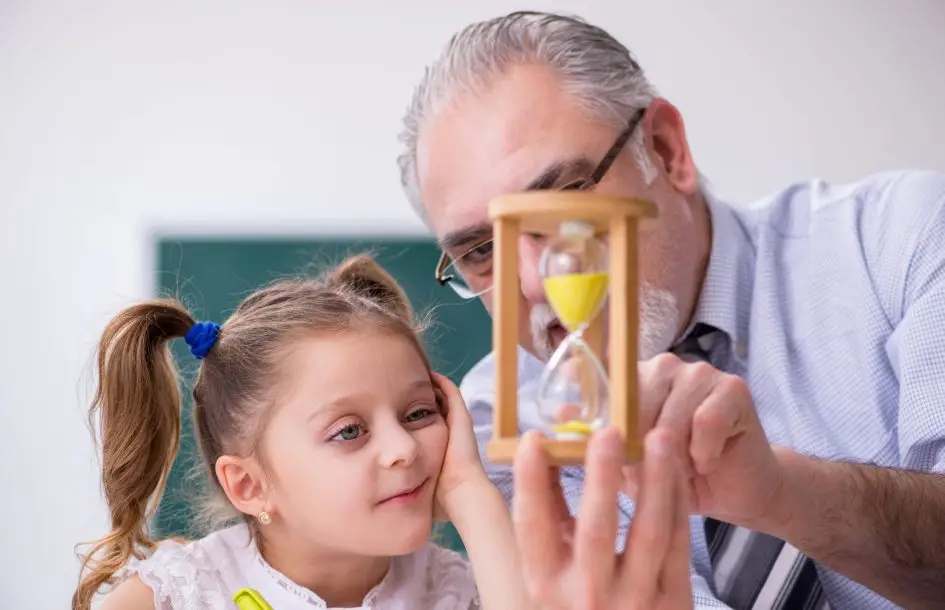
Waiting feels endless when children don’t know when it will end. Visual cues help children see that waiting has a clear endpoint. Many preschools in Silver Spring use visual timers during transitions for this exact reason.
Try:
Story time is a natural opportunity for building patience.
When children:
They are strengthening impulse control.
You can expand on this at home with ideas from our post Storytelling Activities for Preschoolers: Building Language and Imagination , which supports both language development and self-regulation skills.
When your child waits (even briefly), notice it.
Instead of: “Good job.”
Try: “I saw you waiting while your sister finished. That was hard, and you did it.”
Specific praise reinforces the behavior and builds internal motivation.

Patience is developmental. Some days will feel smoother than others.
The goal isn’t silent waiting or perfect behavior. The goal is helping children learn:
Learning how to teach preschoolers patience is about building tolerance for small delays, helping children manage frustration, and creating predictable routines that feel safe.
Patience develops gradually between ages three and six. Some children need more repetition than others, and that’s completely normal. We see the most progress when expectations are consistent and encouragement is steady.
Over time, small daily practice such as waiting a turn, listening during a story, or pausing before reacting, strengthens emotional regulation, social confidence, and independence in meaningful ways.
MCCA has been recognized by the Maryland State Legislature for its commitment to Montgomery County issued a quality programs and special needs child care Proclamation in 2016 to MCCA for its commitment to Montgomery County child care for more than 50 years. MCCA was also selected as a 2018 nonprofit finalist for a MOXIE Award for boldness and innovation
MCCA is the oldest nonprofit licensed child care provider in Montgomery County and started its work in 1968 as a Community Action Project of the War on Poverty. Recognizing the need for quality child care programs in their neighborhoods, a group of local activists formed an association to establish centers in Montgomery County that would serve a diverse population and establish high standards for child care. Now, more than 50 years later, MCCA’s dedicated and expertly trained staff continue their tradition of providing high quality child care and play-based education for children.
Families with school aged children who can afford their child care expenses during the school year often struggle to afford the all-day programs they need when school is out for the summer. The Richard Krampf Summer Adventures Scholarship Fund was established to help provide children a safe and stimulating place to spend their weeks when school is out. Please contact an MCCA Director for details on how to apply.