
Kids love to learn about other cultures! There are many activities you can do to teach your child about other families, cultures, languages, foods, music, and more. An International Day celebration, for example, can give children the opportunity to imagine traveling to different countries while discovering how people and families around the world celebrate what makes them unique.
There are many easy ways to teach your child about other cultures. Whether it’s through books, foods, music, stories, and more. All of these will allow your child to learn more about others and how everyone is alike and different.
For families in diverse communities such as Garrett Park, these conversations can also help children better understand and appreciate the many backgrounds represented around them.
Kids will always have questions about why others speak a different language, eat certain foods, or do certain things that may differ from your family.
Use those questions to learn more about that culture.
Here are some questions to start off your child’s education:
The goal is not for children to memorize facts about countries. Instead, cultural activities can help children understand that families may have different traditions and experiences while sharing many of the same things, such as spending time together, celebrating special moments, helping one another, and caring for their communities.
Teach your child about other cultures through activities that are simple and enjoyable for your family.
Travel the world without leaving your house.
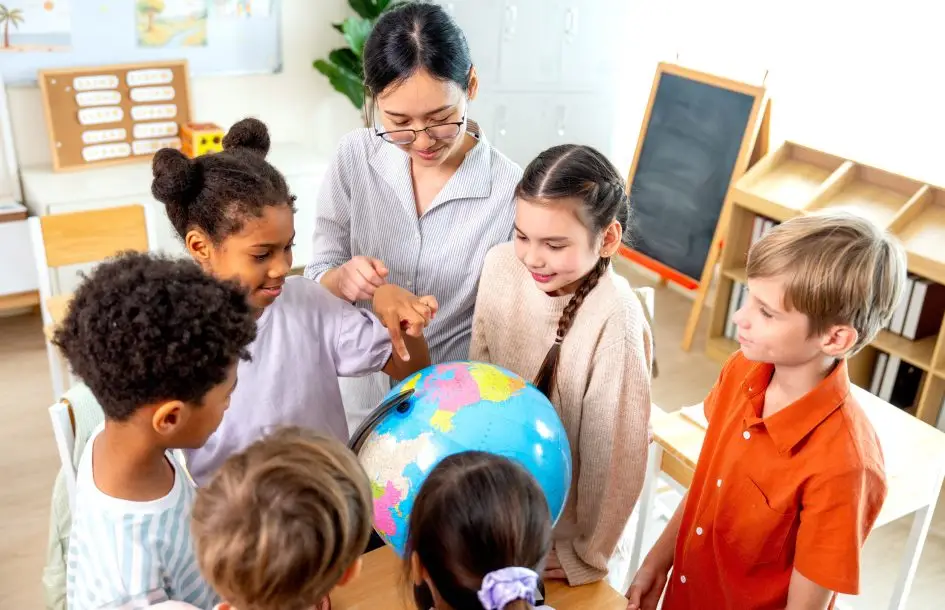
Pick a country that you and your child want to learn more about. Learn more about that country by looking at a map, looking up pictures, learning some of their language, or just looking at pictures of daily life in that country.
Make it fun by pretending you’re flying to that country. Let your child pack a backpack and make up a passport. Ask them where they want to go next.
For younger children, keep the activity simple. Look at pictures, listen to music, or read a children’s book connected to the country you are exploring. For older children, encourage them to find the country on a map and share something interesting they learned.

Start by learning about your family’s culture. Help your child make a small book about your family. Your family’s culture, foods, holidays, languages and so on. Have your child draw pictures or dictate to you and you can write it down.
Once your child learns more about their own culture, they can learn about others. Everyone celebrates different holidays, eats different foods, and speaks different languages. There are so many things we can teach our children about other cultures by starting with our own.
If your child lives in Garrett Park or any other community that has many different cultures, your child can learn about their friends’ families too. Teaching your child about your family will open up the topic to other families and cultures.
Food can be a simple and engaging way to introduce children to different cultures. Pick a recipe that goes with the country you are learning about. Have your child help you cook by washing the food, pouring, mixing and stirring. When cooking, you can teach your child how to measure, count and describe the food.
You don’t have to make big meals. Even letting your child try new fruits, breads and snacks is great.

Listening to music from other countries is another great activity to do with your child. Find music that represents that country and ask your child to listen for different instruments. Let them dance to the music and maybe even create their own.
Some questions to ask your child while listening to music.
Children do not need to understand every part of a song to enjoy exploring it. The experience can simply encourage curiosity about how people around the world express themselves through music.
Another way to learn about other cultures is by reading. Read your child books about other countries and cultures. After you read the book, ask your child some questions.
By reading books to your child about other cultures, they will learn about language and other cultures. Check out our article on Storytelling Activities for Preschoolers.
All of these activities will allow your child to connect with others. They will learn how to listen to others, ask questions, and learn about others’ points of view.
Once your child starts learning about other cultures, they will begin to connect with others in their classroom and outside of school. Your child may learn that a friend celebrates a holiday they have never heard of or speaks a different language. Instead of seeing the difference as something unfamiliar or confusing, children can learn to approach it with curiosity and respect.
Social experiences like these are part of learning how to communicate and build relationships with others. You can learn more in our article on How Socialization in Early Childhood Supports Kindergarten Readiness.
Whether your family takes a pretend trip around the world, cooks a new recipe, creates a family culture book, listens to music, or reads stories from different places, the goal is to make learning about diversity a positive part of childhood.
Cultural activities for kids can be a simple and enjoyable way to introduce children to the many different ways families live, celebrate, communicate, and connect with one another. Most importantly, children can learn that differences are something to be curious about and respected. By creating opportunities to learn about both their own family and the experiences of others, parents can help children grow into thoughtful, open-minded, and respectful members of their communities.
MCCA has been recognized by the Maryland State Legislature for its commitment to Montgomery County issued a quality programs and special needs child care Proclamation in 2016 to MCCA for its commitment to Montgomery County child care for more than 50 years. MCCA was also selected as a 2018 nonprofit finalist for a MOXIE Award for boldness and innovation
MCCA is the oldest nonprofit licensed child care provider in Montgomery County and started its work in 1968 as a Community Action Project of the War on Poverty. Recognizing the need for quality child care programs in their neighborhoods, a group of local activists formed an association to establish centers in Montgomery County that would serve a diverse population and establish high standards for child care. Now, more than 50 years later, MCCA’s dedicated and expertly trained staff continue their tradition of providing high quality child care and play-based education for children.
Families with school aged children who can afford their child care expenses during the school year often struggle to afford the all-day programs they need when school is out for the summer. The Richard Krampf Summer Adventures Scholarship Fund was established to help provide children a safe and stimulating place to spend their weeks when school is out. Please contact an MCCA Director for details on how to apply.