
It can be hard to tell if your child is making friends at school. While some kids will come home and tell you about their new best friend, others may not mention anything at all.
As a parent, it’s hard to know if your child is making friends after they enter a new classroom or start the new school year. Every child learns how to make friends at different paces. They may make a new best friend right away or it could take them longer.
Instead of focusing on whether your child has a “best friend,” look for the smaller signs that your child is becoming comfortable, participating with others, and developing relationships.
Your child may:
There are many signs that your child is getting to know the other kids in their classroom.
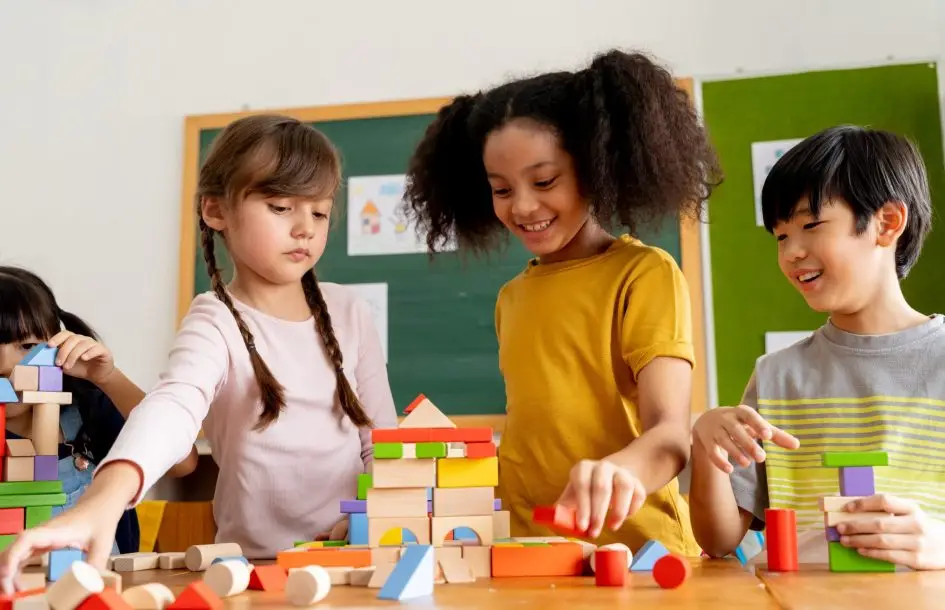
Every child will make friends differently. Some children will play side by side with others and not actually play together. As they get older, they will learn how to include others in their games.
Kids in preschool will start to invite others to play with them. They may learn how to share with others and develop a friend they enjoy playing with. Children may also start to argue with each other.
As children get older, they may start to pick certain children to be friends with. They will learn how to play with others and maybe even become closer to that friend outside of school.
Just because your child doesn’t have a “best friend” doesn’t mean they aren’t learning how to socialize. Look for your child to grow in these areas.

Every child is different. Some children love to tell you everything about their day at school. Others will answer your question with a one-word response.
Your child may not tell you about their friends because they are tired from their day. Or they may not think to mention it to you. Instead of asking “Did you make any friends today?” try asking your child these questions.
Here are some examples:
This can allow your child to open up more about their day at school.
You can help your child learn how to socialize with others by allowing them to play with other children. Whether it’s at a play date, in your neighborhood, playing sports, or even at family functions. All of these allow your child to learn how to start a conversation with others.
Practice these phrases with your child at home.
Here are some examples:
For younger children, you may have to help them with this. As they get older, they can come up with their own phrases to include others in their play.
Your child may take a little while to warm up to new friends. If your child wants to watch others play before joining in, give them time to do this.
You can tell your child, “You can watch for a bit. Once you are ready, you can ask if you want to play.”
Allow your child to take baby steps when playing with others. They may start to play near others and slowly begin to play with them.
Your child’s teacher in Potomac can also notice these baby steps throughout the school year.

If you continue to worry about your child making friends, you should speak with their teacher. You only know half of what your child does at school.
Your child’s teacher can tell you:
Your child’s teacher may know more about your child’s social skills at school than you do. Speak with your teacher about any concerns you may have.

Every child takes different amounts of time to make friends at school. Some may find a playmate the first week, and others may take a couple of months to make their first best friend.
Don’t worry if your child doesn’t have a best friend yet. Just make sure they are interacting with others. Are they talking to other children? Playing with others? Learning how to share with others and play nicely?
All of these are signs your child is learning how to socialize.
MCCA has been recognized by the Maryland State Legislature for its commitment to Montgomery County issued a quality programs and special needs child care Proclamation in 2016 to MCCA for its commitment to Montgomery County child care for more than 50 years. MCCA was also selected as a 2018 nonprofit finalist for a MOXIE Award for boldness and innovation
MCCA is the oldest nonprofit licensed child care provider in Montgomery County and started its work in 1968 as a Community Action Project of the War on Poverty. Recognizing the need for quality child care programs in their neighborhoods, a group of local activists formed an association to establish centers in Montgomery County that would serve a diverse population and establish high standards for child care. Now, more than 50 years later, MCCA’s dedicated and expertly trained staff continue their tradition of providing high quality child care and play-based education for children.
Families with school aged children who can afford their child care expenses during the school year often struggle to afford the all-day programs they need when school is out for the summer. The Richard Krampf Summer Adventures Scholarship Fund was established to help provide children a safe and stimulating place to spend their weeks when school is out. Please contact an MCCA Director for details on how to apply.