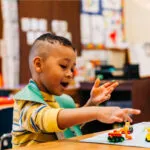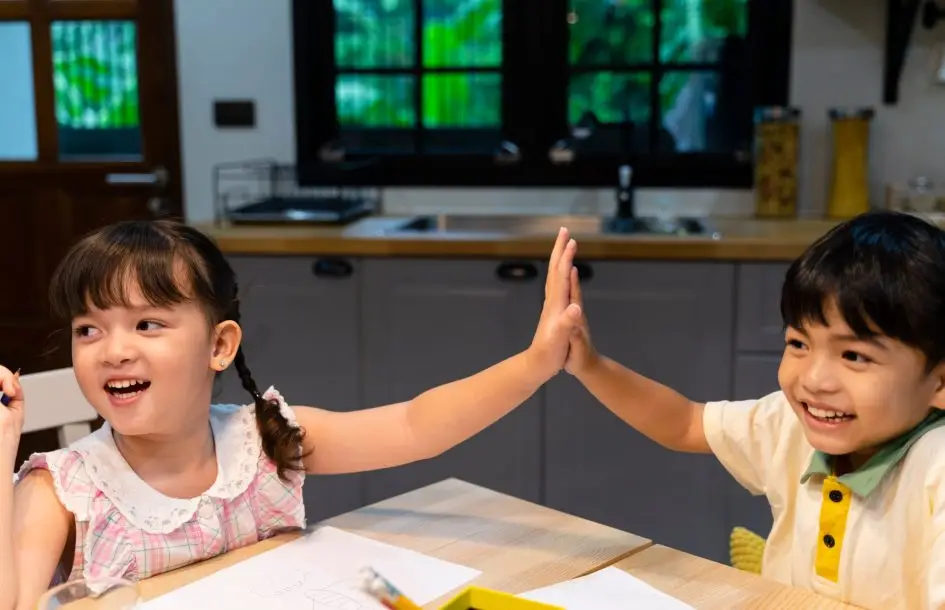

Preschool friendships play an important role in a child’s social, emotional, and academic development. While many parents initially focus on early literacy and numbers, learning how to build positive relationships with peers is another critical part of preparing for future success.
Teachers in Potomac preschools often observe that children who develop positive peer relationships feel more confident participating in classroom activities and adjusting to new learning environments.
Young children learn social skills by interacting with other children every day.
When preschoolers play together, they naturally practice:
These interactions help children become more comfortable navigating social situations and building relationships over time.
You can learn more about social development in our article on How to Encourage Back-and-Forth Conversations in Preschoolers.

For many children, having a friend at preschool can make new experiences feel less overwhelming.
Friendships often help children:
Educators in Potomac frequently notice that children who feel connected to their peers often adjust more easily to classroom routines and transitions.
Friendships create opportunities for children to experience a wide range of emotions in a supportive environment.
Through relationships with peers, children learn how to:
These experiences help children strengthen emotional regulation skills that will continue developing throughout childhood.
We’ve explored related emotional development in our article on How to Teach Emotional Regulation to Preschoolers: Simple Daily Strategies.
Conflict is a normal part of friendship and an important learning opportunity.
Preschoolers are still developing the skills needed to:
With support from caring adults, children gradually learn how to work through challenges and repair relationships.
Learn more in: How to Help Children Handle Conflicts with Classmates

Many of the skills children develop through friendships directly support kindergarten readiness.
These include:
When children feel comfortable interacting with classmates, they are often more prepared to engage in group learning experiences and classroom routines.
You can learn more in our article on Why Socialization in Early Childhood Sets Kids Up for Kindergarten Success.
Parents can help children develop positive friendships by creating opportunities for social interaction and modeling healthy relationship skills.
Simple ways to support friendship development include:
Parents can also help children reflect on social experiences by asking questions such as:
These conversations help children build awareness of their relationships and social experiences.

In classrooms throughout Potomac, educators often see that positive friendships contribute to a welcoming and supportive learning environment.
While every child develops friendships differently, strong peer relationships often become an important part of a positive preschool experience.
Preschool friendships may seem simple on the surface, but they help children develop important social and emotional skills that support learning both now and in the future.
Through everyday interactions, children learn how to communicate, cooperate, solve problems, and care about others. These early relationships help build confidence, strengthen emotional growth, and create a foundation for success in kindergarten and beyond.
MCCA has been recognized by the Maryland State Legislature for its commitment to Montgomery County issued a quality programs and special needs child care Proclamation in 2016 to MCCA for its commitment to Montgomery County child care for more than 50 years. MCCA was also selected as a 2018 nonprofit finalist for a MOXIE Award for boldness and innovation
MCCA is the oldest nonprofit licensed child care provider in Montgomery County and started its work in 1968 as a Community Action Project of the War on Poverty. Recognizing the need for quality child care programs in their neighborhoods, a group of local activists formed an association to establish centers in Montgomery County that would serve a diverse population and establish high standards for child care. Now, more than 50 years later, MCCA’s dedicated and expertly trained staff continue their tradition of providing high quality child care and play-based education for children.
Families with school aged children who can afford their child care expenses during the school year often struggle to afford the all-day programs they need when school is out for the summer. The Richard Krampf Summer Adventures Scholarship Fund was established to help provide children a safe and stimulating place to spend their weeks when school is out. Please contact an MCCA Director for details on how to apply.