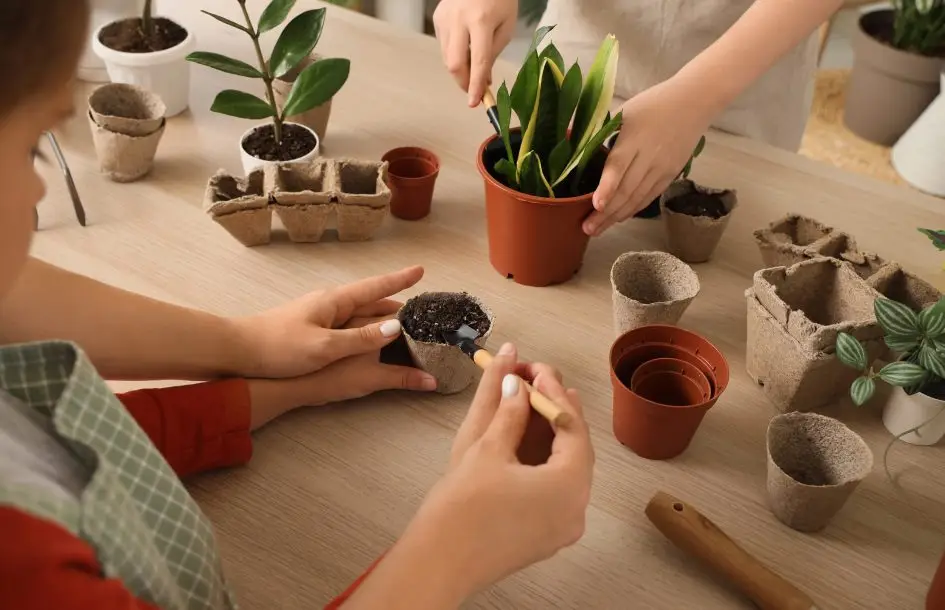

Easy spring STEM activities for children are a fun and engaging way to help young children explore science, technology, engineering, and math through hands-on play. Spring naturally invites curiosity, making it the perfect season to introduce simple experiments that encourage observation, problem-solving, and discovery.
In early childhood classrooms, especially in programs such as those in Gaithersburg, MD, educators often notice that seasonal changes spark deeper curiosity in the world around them and more meaningful engagement in learning activities. Children are often more eager to investigate, observe, and participate when learning connects to what they can experience outdoors and in everyday life.
Hands-on STEM experiences help children build foundational skills without feeling like traditional instruction. Through simple experiments, building activities, and nature-based exploration, young learners practice important developmental skills while having fun.
Key Benefits of STEM Learning for Preschoolers
You can also learn more about how curiosity supports development in Why Play Is Important for Preschoolers: 6 Ways Play Supports Learning, where we explore how play-based learning builds early academic skills.

This simple experiment builds observation skills while introducing basic plant science. Children begin to understand that plants need water to survive and that stems carry water upward to the leaves and petals.
Materials:
Steps:
Ask your child:
This is one of the easiest hands-on learning activities for preschoolers because it combines movement, nature, observation, and basic ideas about weight and density.
Materials:
Steps:
Ask your child:
Activities like this also pair well with sensory-based learning. You can explore similar ideas in:
Spring Sensory Bins for Kids: Fun Hands-On Learning Activities

This hands-on activity gives children a more realistic understanding of how plants grow while building responsibility. Instead of just observing, they actively care for something living.
Materials:
Steps:
As the days pass, children can observe sprouts pushing through the soil and begin to understand how plants grow in real environments. This activity helps build patience, consistency, and a sense of responsibility as they care for their plant each day.
This simple science experiment teaches weather concepts. Children will learn that clouds hold water droplets until they become heavy enough to fall as rain.
Materials:
Steps:
Ask you child:

This colorful spring science activity helps children observe how water can move and mix between cups. Children will also explore absorption, observation skills, and early cause-and-effect concepts through hands-on discovery.
Materials:
Steps:
Ask your child:
Aside from experiments, STEM learning does not need to be complicated or structured. Simple daily moments can become learning opportunities:
These small moments reinforce early math and science thinking in a natural way.
Easy spring STEM activities for preschoolers are a powerful way to build curiosity, confidence, and early academic skills through hands-on exploration. Trying new activities builds resilience. Teachers in Gaithersburg, MD schools often see children become more confident when they are encouraged to explore without fear of being “wrong” and with simple materials and everyday moments, children can begin to understand the world around them in meaningful ways.
Whether at home or in the classroom, spring is the perfect time to encourage discovery, creativity, and joyful learning through STEM.
For more activities to do this spring, visit:
MCCA has been recognized by the Maryland State Legislature for its commitment to Montgomery County issued a quality programs and special needs child care Proclamation in 2016 to MCCA for its commitment to Montgomery County child care for more than 50 years. MCCA was also selected as a 2018 nonprofit finalist for a MOXIE Award for boldness and innovation
MCCA is the oldest nonprofit licensed child care provider in Montgomery County and started its work in 1968 as a Community Action Project of the War on Poverty. Recognizing the need for quality child care programs in their neighborhoods, a group of local activists formed an association to establish centers in Montgomery County that would serve a diverse population and establish high standards for child care. Now, more than 50 years later, MCCA’s dedicated and expertly trained staff continue their tradition of providing high quality child care and play-based education for children.
Families with school aged children who can afford their child care expenses during the school year often struggle to afford the all-day programs they need when school is out for the summer. The Richard Krampf Summer Adventures Scholarship Fund was established to help provide children a safe and stimulating place to spend their weeks when school is out. Please contact an MCCA Director for details on how to apply.