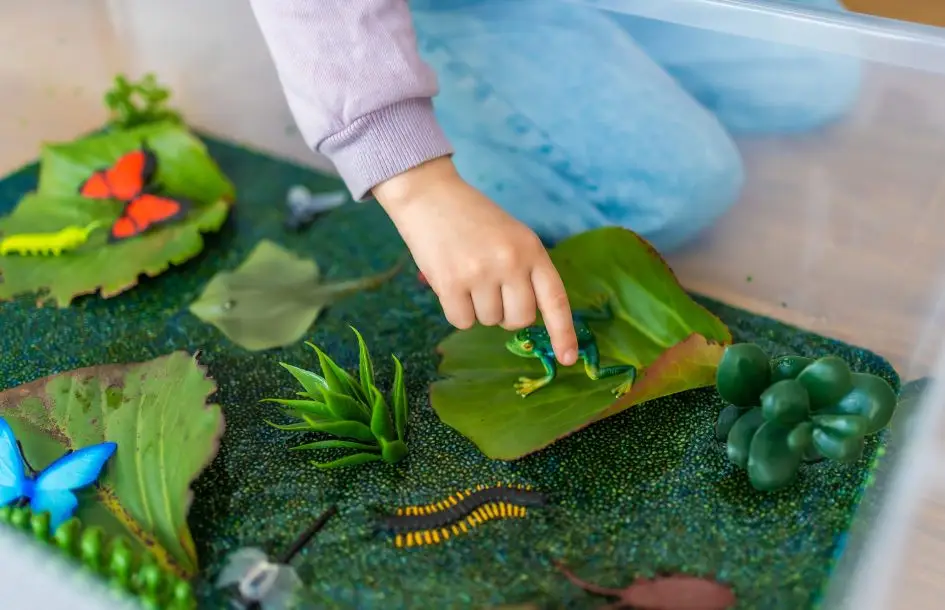

Sensory play is a powerful way to support early learning, and spring is the perfect season to bring hands-on exploration into your child’s day. Spring sensory bins for kids combine tactile experiences with imaginative play, helping children develop fine motor skills, language, and creativity while enjoying the sights and themes of the season.
Teachers in Rockville, MD preschools often see children engage deeply with seasonal sensory bins, experimenting, exploring, and learning through play in ways that are both fun and educational.
Sensory bins allow children to explore textures, colors, and objects while practicing important developmental skills. They support:
Fine motor skills: Scooping, pouring, and sorting items builds hand-eye coordination.
Cognitive development: Exploring patterns, counting items, and problem-solving strengthens early learning.
Language and social skills: Children describe what they see, tell stories, and collaborate with peers.
Preschools such as those in Rockville, MD often incorporate sensory bins into daily routines because they combine learning and play naturally.
You can learn more about this in our articles:
Helping Children Grow: How Child Care Centers Encourage Independence
Fine Motor Skills for Children: Simple Daily Activities to Build Strength & Coordination

Materials: Artificial flowers, soil or brown rice, tweezers, small pots
Children can “plant” flowers, count petals, and pretend to water their garden. Encourage them to sort flowers by color or size, or create patterns in their pots. Using tweezers to place flowers helps strengthen hand muscles for writing and coordination. This activity also enhances critical thinking and teaches responsibility for caring for living things.
Tip: For younger children, use larger flowers or pom-poms instead of small artificial blooms to reduce choking hazards.
Materials: Green-colored water or dyed rice, chia seeds, toy insects, small plastic plants, magnifying glasses, tweezers
Create a swamp-themed sensory bin by using green-colored water or rice as the base and adding chia seeds to create a thick, swamp-like texture. Place toy insects and small plants throughout the bin to build a realistic environment.
Children can search for insects, sort them by type or color, and learn the names of different bugs to encourage curiosity and observation. Using magnifying glasses, they can examine details like wings, legs, and antennae while creating their own imaginative swamp adventures.
Tip: Swap out small bugs for larger ones for younger children to keep it safe.

Materials: Blue beads, colored rice, or water, mini umbrellas, toy rain boots
Children scoop “rain,” pour it into containers, and act out rainy day scenarios. Ask them to predict what happens when water is poured over objects or mix colors in rice or water to observe changes. This bin encourages creativity while reinforcing cause-and-effect understanding.
Tip: If using water, supervise closely and limit small objects for toddlers to avoid swallowing.
Materials: Plastic eggs, shredded paper, small toys or stickers inside eggs
Children dig for eggs, open them, and sort the contents. You can make it more educational by having them count the eggs, sequence colors, or categorize items inside (e.g., stickers vs. toys). This activity combines festive fun with hands-on learning and encourages excitement for exploration.

Rotate materials regularly: Keeps play engaging and introduces new vocabulary.
Ask open-ended questions: Encourage children to think creatively, e.g., “What can you create with this?”
Observe play: Watch for emerging interests and developmental skills.
Collaborate with peers: Sensory bins encourage sharing, negotiation, and cooperative learning.
Spring-themed sensory bins are a fun and engaging way to support children’s learning, imagination, and fine motor skills while celebrating the season. By providing safe, supervised opportunities for children to experiment and play, parents and educators in Rockville, MD help kids build confidence, curiosity, and a love of learning. Sensory play like this not only strengthens practical skills but also nurtures creativity and social-emotional growth, making every spring day a chance to explore, discover, and grow.
For more on supporting children’s creativity, visit:
MCCA has been recognized by the Maryland State Legislature for its commitment to Montgomery County issued a quality programs and special needs child care Proclamation in 2016 to MCCA for its commitment to Montgomery County child care for more than 50 years. MCCA was also selected as a 2018 nonprofit finalist for a MOXIE Award for boldness and innovation
MCCA is the oldest nonprofit licensed child care provider in Montgomery County and started its work in 1968 as a Community Action Project of the War on Poverty. Recognizing the need for quality child care programs in their neighborhoods, a group of local activists formed an association to establish centers in Montgomery County that would serve a diverse population and establish high standards for child care. Now, more than 50 years later, MCCA’s dedicated and expertly trained staff continue their tradition of providing high quality child care and play-based education for children.
Families with school aged children who can afford their child care expenses during the school year often struggle to afford the all-day programs they need when school is out for the summer. The Richard Krampf Summer Adventures Scholarship Fund was established to help provide children a safe and stimulating place to spend their weeks when school is out. Please contact an MCCA Director for details on how to apply.