
Preschool math doesn’t need worksheets, flashcards, or complicated lessons. Young children learn best through play by touching, counting, building, and exploring the world around them. When math is incorporated naturally into a child’s daily routine, it becomes fun, meaningful, and confidence-boosting.
Below are 6 hands-on, screen-free math activities perfect for home or after a day of preschool in Olney, where play-based learning supports early math skills.
Children learn best when they can touch, manipulate, and explore objects. Hands-on math activities help preschoolers:
Sorting is an essential early math skill and can be done anywhere.
How to try it:
This activity supports math skills that children practice daily at many early childhood programs, especially in play-based classrooms like those found in Olney early learning centers.

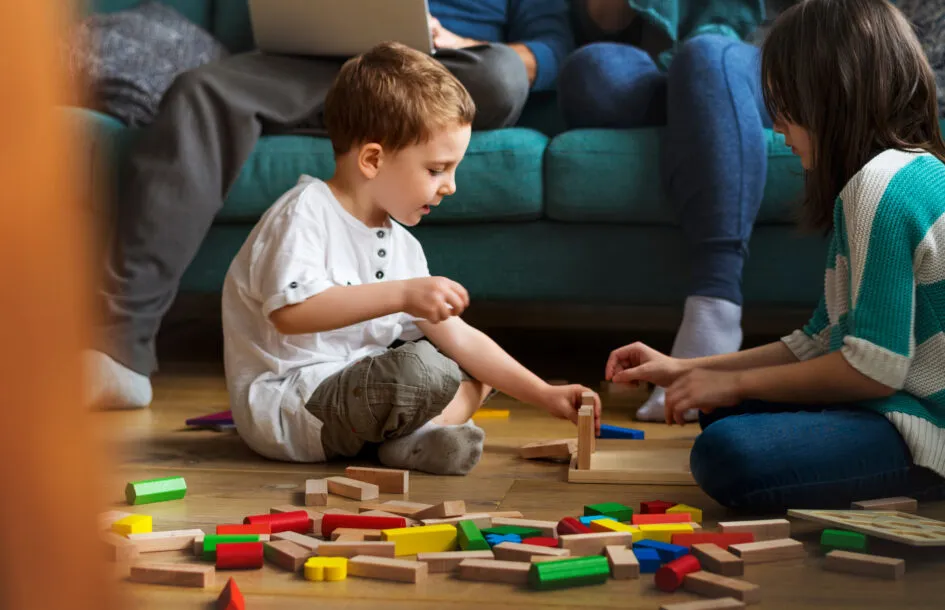
Grab any set of blocks: wooden, magnetic, or even plastic cups.
How to play:
This activity helps children understand quantity, number order, and cause-and-effect, while giving you preschooler a sense of accomplishment.
Patterns appear everywhere, and preschoolers love making them.
Try using:
Start with simple sequences, like red-yellow-red-yellow, and encourage your child to continue the pattern or make their own. Patterns support early algebraic thinking and problem-solving skills.

Children naturally recognize shapes, making a shape hunt both fun and educational. This activity strengthens shape recognition and counting skills.
How to play:
Use snack time for comparison and measurement skills.
How to play:
Hands-on, snack-based math is a gentle way to reinforce the skills they practice during their time at Olney preschools.
Take math outside! For example, ask your child to collect:
Then sort, count, and compare.
This boosts observation skills and gives children calming, sensory-rich learning time.
For more fun ways to incorporate math at home, see: Making Math Fun: Engaging Activities to Teach Early Numeracy Skills

Young children learn through movement, touch, and experimentation. Worksheets focus on memorization, while hands-on play supports problem-solving and deeper understanding.
They already practice math every day during playtime, routines, meals, and outdoor activities. You can simply build math language (“one more,” “bigger,” “count with me”) into daily moments.
Keep activities playful. Remove pressure. Break down tasks. Children thrive when math feels like a game.
Hands-on math doesn’t require structured lessons. With simple, everyday objects and playful interaction, your preschooler can build strong foundational math skills at home and after school.
If you’re looking for early learning programs that embrace hands-on, play-based math experiences, explore local child care and preschool options in your area.
For more tips on learning at home, see our posts:
MCCA has been recognized by the Maryland State Legislature for its commitment to Montgomery County issued a quality programs and special needs child care Proclamation in 2016 to MCCA for its commitment to Montgomery County child care for more than 50 years. MCCA was also selected as a 2018 nonprofit finalist for a MOXIE Award for boldness and innovation
MCCA is the oldest nonprofit licensed child care provider in Montgomery County and started its work in 1968 as a Community Action Project of the War on Poverty. Recognizing the need for quality child care programs in their neighborhoods, a group of local activists formed an association to establish centers in Montgomery County that would serve a diverse population and establish high standards for child care. Now, more than 50 years later, MCCA’s dedicated and expertly trained staff continue their tradition of providing high quality child care and play-based education for children.
Families with school aged children who can afford their child care expenses during the school year often struggle to afford the all-day programs they need when school is out for the summer. The Richard Krampf Summer Adventures Scholarship Fund was established to help provide children a safe and stimulating place to spend their weeks when school is out. Please contact an MCCA Director for details on how to apply.