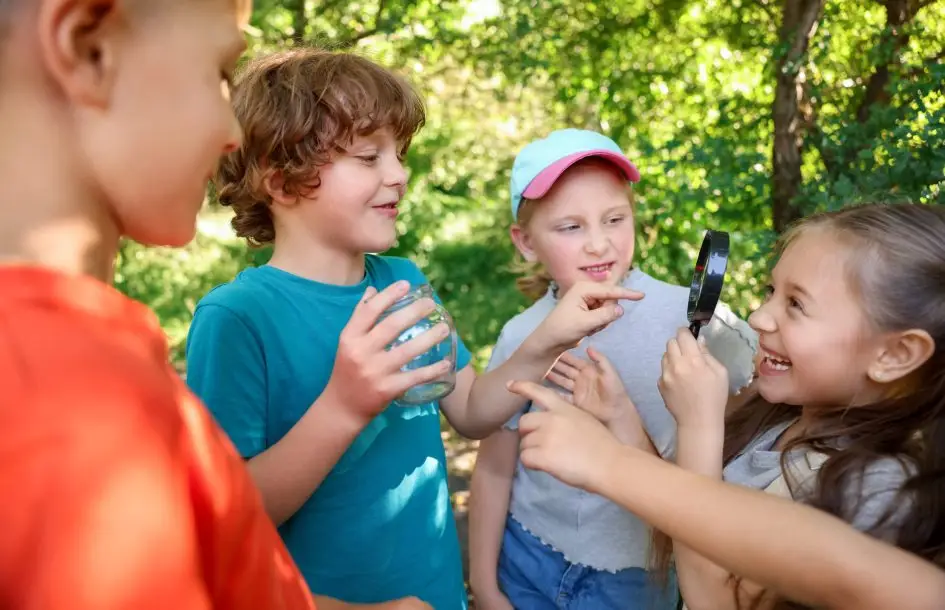

Nature scavenger hunt activities are a simple and exciting way to encourage children to explore the outdoors while building observation skills and curiosity for the natural world. Whether families are visiting a local park, walking through the neighborhood, or spending time in their own backyard, a nature scavenger hunt can turn an ordinary outing into an engaging learning experience.
One of the best things about nature scavenger hunts is that they require very few supplies and can be adapted for toddlers, preschoolers, and school-age children.
Educators in Garrett Park often find that outdoor learning activities help children stay engaged while encouraging exploration, critical thinking, and meaningful conversations about the world around them.

A scavenger hunt can be as simple or detailed as you would like.
Children can search for:
Colors in Nature
Challenge children to find:
This activity helps strengthen observation skills while reinforcing color recognition.
Plants and Natural Objects
Invite children to look for:
Encourage them to compare sizes, shapes, and textures as they explore.
Animals and Insects
Observing animals in their natural environment often leads to interesting questions and discussions.
Children can search for:
Shapes and Patterns
This activity encourages children to connect nature with early math and observation skills.
Ask children to find:

Nature scavenger hunts provide opportunities to build multiple skills at the same time.
Children practice:
As children describe what they find, they also strengthen language skills and learn new words related to nature and science.
You can learn more about learning through exploration in our article on Summer STEM Activities for Kids: Fun Experiments and Hands-On Learning.
Encourage Children to Ask Questions
When children discover something interesting, encourage them to wonder and investigate.
Questions might include:
The goal is not to have all the answers but to encourage curiosity and exploration.
Bring a Nature Journal
A notebook or journal can help children record what they discover.
Children can:
This simple addition encourages reflection and observation while supporting early literacy skills.
Take Photos of Discoveries
Children can use a camera or phone with adult supervision to photograph interesting items they find.
Later, families can review the photos together and talk about what they learned.
Teachers in Garrett Park often notice that documenting discoveries helps children stay engaged and encourages them to look more carefully at their surroundings.

A nature scavenger hunt for kids is a simple, free activity that combines outdoor play with meaningful learning opportunities. By searching for plants, animals, colors, shapes, and patterns, children develop observation skills, curiosity, and a greater appreciation for the natural world.
For more outdoor learning ideas, explore:
MCCA has been recognized by the Maryland State Legislature for its commitment to Montgomery County issued a quality programs and special needs child care Proclamation in 2016 to MCCA for its commitment to Montgomery County child care for more than 50 years. MCCA was also selected as a 2018 nonprofit finalist for a MOXIE Award for boldness and innovation
MCCA is the oldest nonprofit licensed child care provider in Montgomery County and started its work in 1968 as a Community Action Project of the War on Poverty. Recognizing the need for quality child care programs in their neighborhoods, a group of local activists formed an association to establish centers in Montgomery County that would serve a diverse population and establish high standards for child care. Now, more than 50 years later, MCCA’s dedicated and expertly trained staff continue their tradition of providing high quality child care and play-based education for children.
Families with school aged children who can afford their child care expenses during the school year often struggle to afford the all-day programs they need when school is out for the summer. The Richard Krampf Summer Adventures Scholarship Fund was established to help provide children a safe and stimulating place to spend their weeks when school is out. Please contact an MCCA Director for details on how to apply.