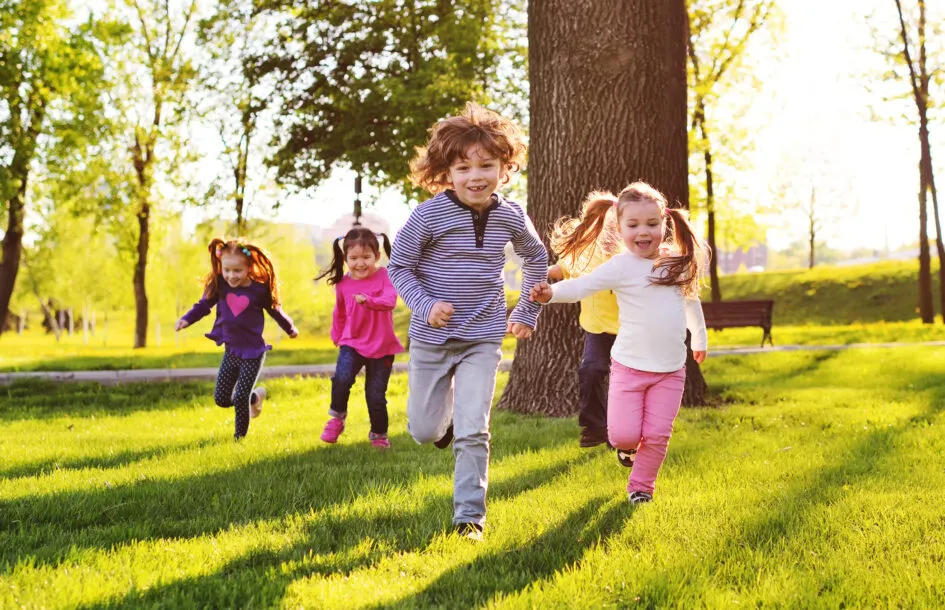

Gross motor skills for children form the foundation of movement, confidence, and physical development. It helps young learners run, climb, jump, balance, and explore their world with growing independence. These abilities develop rapidly during the early years and play a key role in physical development, school readiness, and overall wellness.
Children in early learning programs in Garrett Park build these skills daily through outdoor play, movement-rich classroom routines, and hands-on exploration. Families can continue strengthening them at home with simple, playful routines.
Strong gross motor abilities support every part of a child’s growth:
Physical health: Better stamina, posture, and core strength
Safety: Confidence navigating playgrounds, steps, and new environments
Academic readiness: Improved focus, midline coordination, and body control
Emotional regulation: Movement helps children release energy and reset
Social development: Many activities encourage teamwork and turn-taking
Gross motor skills also lay the groundwork for fine motor skills such as writing, using utensils, buttoning, and cutting. They need strong cores and upper-body muscles before they can master precise hand movements.
For other ways to support these aspects of child growth, see our posts:

These gross motor development activities are simple, screen-free, and perfect after a day at their early learning center in Garrett Park, where children already practice physical skills through climbing, balancing, and active play.
Create zig-zag paths with painter’s tape, crawl-under tunnels with chairs, or jumping stations with pillows. Children strengthen coordination, balance, and body awareness while having fun.
During quick nature walks around Garrett Park, invite prompts like:
These playful cues turn everyday outings into early childhood motor skills practice.

These movements boost strength, imagination, and full-body coordination.
Keeping a balloon in the air helps timing, tracking, and coordination. Add challenges like using elbows, knees, or only one hand to build additional control.
Climbing structures, slides, ladders, and balance beams naturally support preschool physical development. Even short outdoor sessions provide big benefits.

Purposeful movement builds strength and confidence.
Ask children to:
Many parents notice that when their child becomes stronger and more coordinated, fine motor skills like writing, drawing, and self-care become easier. That’s because:
To learn more fine motor skills, see:
Fine Motor Skills for Children: Simple Daily Activities to Build Strength & Coordination
When families blend play, exploration, and open-ended movement, they give children the chance to develop strong gross motor skills, build confidence, and develop healthy habits that last. Even a few minutes of daily active play can make a meaningful difference in a child’s overall well-being.
For more insights on child development, see our posts on:
MCCA has been recognized by the Maryland State Legislature for its commitment to Montgomery County issued a quality programs and special needs child care Proclamation in 2016 to MCCA for its commitment to Montgomery County child care for more than 50 years. MCCA was also selected as a 2018 nonprofit finalist for a MOXIE Award for boldness and innovation
MCCA is the oldest nonprofit licensed child care provider in Montgomery County and started its work in 1968 as a Community Action Project of the War on Poverty. Recognizing the need for quality child care programs in their neighborhoods, a group of local activists formed an association to establish centers in Montgomery County that would serve a diverse population and establish high standards for child care. Now, more than 50 years later, MCCA’s dedicated and expertly trained staff continue their tradition of providing high quality child care and play-based education for children.
Families with school aged children who can afford their child care expenses during the school year often struggle to afford the all-day programs they need when school is out for the summer. The Richard Krampf Summer Adventures Scholarship Fund was established to help provide children a safe and stimulating place to spend their weeks when school is out. Please contact an MCCA Director for details on how to apply.