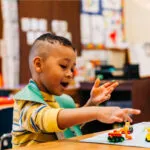

Movement isn’t just play, it’s a key part of how children learn. Teachers in Silver Spring, MD schools often see that children who engage in physical activity show improved focus, memory, and problem-solving skills. Incorporating active play into the day strengthens both cognitive and social-emotional development.

Physical activity increases blood flow and oxygen to the brain, which supports neural growth and cognitive development. Activities like running, jumping, or balancing stimulate areas of the brain responsible for attention, memory, and executive function.
Preschools in Silver Spring, MD often integrate movement breaks to help children return to learning activities like reading or puzzles with renewed focus.
Active play allows children to release energy and return to tasks with better concentration. Simple exercises like obstacle courses, dancing, or hopscotch teach kids to follow directions, anticipate next steps, and maintain attention.
This skill also supports classroom readiness and helps children transition smoothly between activities. Learn more about supporting children’s attention spans in:
How to Support Preschoolers’ Attention Span
Why Some Children Struggle with Listening and How Parents Can Help
Gross motor skills involve large muscle movements such as running, climbing, or throwing. Developing these skills supports physical coordination, balance, and body awareness, all of which are linked to cognitive tasks like writing, cutting, and drawing.
Educators in Silver Spring, MD notice that children with strong gross motor skills often show increased confidence in other learning activities, including puzzles and group projects.
To learn more about developing gross motor skills, visit:
Gross Motor Skills: Why They Matter and How to Strengthen Them
Movement activities often challenge children to plan, strategize, and adjust in real time. Games like building block towers, navigating obstacle courses, or movement-based storytelling enhance critical thinking and creative problem-solving skills.
We’ve explored this topic further in: How to Build Problem-Solving Skills in Preschoolers (Parent Guide)
Group movement activities teach cooperation, empathy, and turn-taking. Team games and collaborative challenges allow children to manage frustration, celebrate effort, and encourage building social-emotional skills alongside physical development.
Preschools such as those in Silver Spring, MD intentionally use cooperative movement activities to strengthen both emotional and social growth.
Movement-based learning keeps children motivated and curious. Adding songs, dance, or movement challenges into lessons reinforces academic concepts while keeping children actively involved.
For instance, combining counting with jumping or stepping patterns teaches numbers, sequencing, and rhythm all at once. You can explore additional strategies in: Why Play Is Important for Preschoolers: 6 Ways Play Supports Learning.

Incorporating movement into a child’s day is a powerful way to support learning. From boosting brain development and focus to building problem-solving and social skills, active play promotes holistic growth. Parents and educators who provide safe, engaging movement opportunities help children develop the skills they need for lifelong learning.
MCCA has been recognized by the Maryland State Legislature for its commitment to Montgomery County issued a quality programs and special needs child care Proclamation in 2016 to MCCA for its commitment to Montgomery County child care for more than 50 years. MCCA was also selected as a 2018 nonprofit finalist for a MOXIE Award for boldness and innovation
MCCA is the oldest nonprofit licensed child care provider in Montgomery County and started its work in 1968 as a Community Action Project of the War on Poverty. Recognizing the need for quality child care programs in their neighborhoods, a group of local activists formed an association to establish centers in Montgomery County that would serve a diverse population and establish high standards for child care. Now, more than 50 years later, MCCA’s dedicated and expertly trained staff continue their tradition of providing high quality child care and play-based education for children.
Families with school aged children who can afford their child care expenses during the school year often struggle to afford the all-day programs they need when school is out for the summer. The Richard Krampf Summer Adventures Scholarship Fund was established to help provide children a safe and stimulating place to spend their weeks when school is out. Please contact an MCCA Director for details on how to apply.