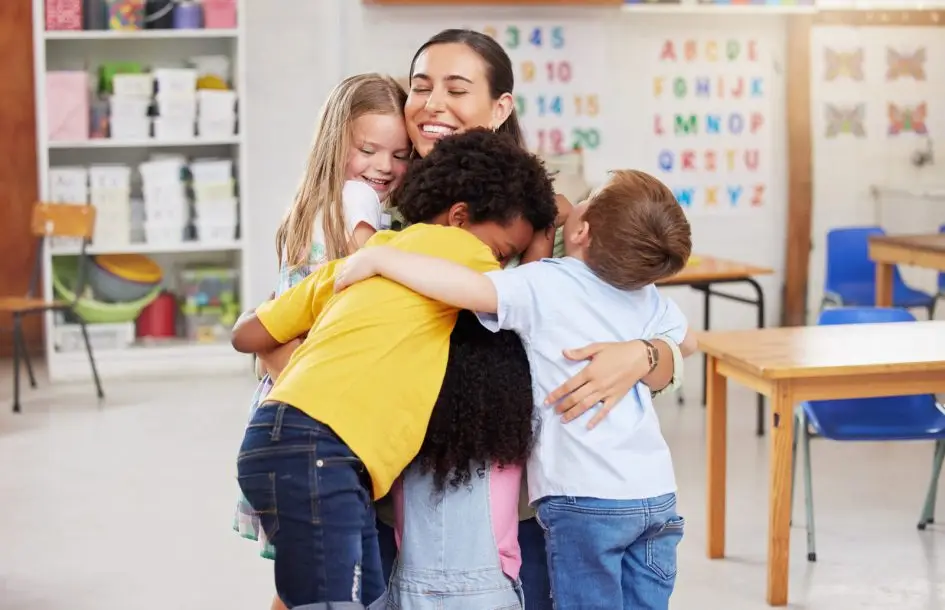

Simple acts of kindness for kids help young children learn to care about others, build friendships, and recognize how their actions can make someone feel. A kind word, a helping hand, or sharing a favorite toy can brighten someone’s day in a meaningful way. With a little encouragement from parents and teachers, children can practice kindness through everyday moments at home, in the classroom, and while playing with friends.
Kindness doesn’t have to involve a big gesture or a special occasion. Small actions give children opportunities to practice empathy, thoughtfulness, and consideration for others. Here are 10 easy ideas to try with your child.
Encourage children to say something nice to a friend, sibling, or classmate. They could compliment someone’s drawing, tell a friend they enjoyed playing together, or notice when someone does something helpful.
You can get the conversation started by asking, “What is something you like about your friend?” This helps children think about the qualities they appreciate in others and find genuine ways to express them.
Putting away toys, organizing art supplies, or helping clear the table are simple ways children can make life a little easier for others. At preschool, children might help return blocks to their bins or tidy up after a group activity.

Teachers in preschool classrooms such as Silver Spring, can encourage these habits by making cleanup a shared activity. Parents can do the same at home by working alongside their children and explaining how helping with shared spaces makes things easier for everyone.
Sharing gives children a chance to think about other people’s needs and practice taking turns. During playtime, encourage your child to offer a toy to a friend or let someone else have a turn with a favorite activity.

Sharing can be difficult for young children, especially when they feel attached to a particular toy. Help them find manageable ways to participate, such as taking turns with a classroom puzzle or choosing materials to share during an art project.
Set out paper, crayons, and markers so children can create a picture for someone they care about. They might draw a cheerful rainbow for a grandparent, make a card for a teacher, or create artwork for a friend who has been feeling sad.

The focus isn’t on making a perfect picture. It’s about thinking of someone else and choosing to do something that might make that person smile.
Starting at a new school or joining an unfamiliar group can feel intimidating. Children can help a new classmate feel included by saying hello, inviting them to play, or showing them where the toys and books are kept.
Practice simple phrases together, such as “Would you like to play with us?” or “Do you want to sit here?” These small gestures can help children feel more comfortable reaching out to others.
Friendships take time to develop, and everyday interactions provide opportunities to practice listening, sharing, and cooperating.
Learn more in: The Role of Preschool in Teaching Kids How to Make Friends.
Children can show kindness by helping with little jobs throughout the day. They might carry napkins to the table, put away groceries with an adult, water a plant, or help a sibling find a missing item.
Choose tasks that match your child’s age and abilities. When children see how their efforts help the people around them, they begin to understand that kindness can be part of ordinary family routines.
Encourage children to thank people who help them, share with them, or do something thoughtful. They can thank a friend for sharing crayons, a teacher for reading a story, or a family member for preparing a meal.
You can also model gratitude by thanking your child when they help. Hearing appreciation in everyday conversations shows children how meaningful it can be to acknowledge another person’s effort.
For more ideas, explore Teaching Gratitude to Preschoolers.
Children may notice when a friend is upset, sitting alone, or having a difficult day. Help them learn gentle ways to respond, such as asking, “Are you okay?” offering a toy, or inviting the child to join an activity.
Remind children that they don’t have to fix someone else’s feelings. Sometimes listening, sitting nearby, or getting a trusted adult to help is a thoughtful response.
Explore: Teaching Kids Empathy and Kindness from an Early Age.
Decorate a jar together and fill it with small pieces of paper describing kind actions. Ideas might include helping a friend, giving someone a compliment, sharing a book, or picking up litter with an adult.
Choose one idea to try each day or week. Children can also add their own suggestions, giving them a chance to think creatively about how to help others.
Keep the activity positive rather than turning it into a competition. The goal is to notice opportunities for kindness, not to see who can complete the most good deeds.
Kindness can extend beyond the people children know. Teach them to care for their surroundings by picking up litter with an adult, watering flowers, treating classroom materials gently, or helping care for a garden.
Talk about how these actions help people, plants, and animals. Simple experiences like these can encourage children to become more thoughtful about the communities and environments they share.
Children learn about kindness through both experience and observation. Parents and teachers can help them develop these skills by making caring behavior part of everyday life.
Lead by Example: Children notice how adults treat other people. Saying thank you, offering help, and speaking respectfully demonstrate what kindness looks like in practice.
Talk About Feelings: Help children recognize emotions by discussing how someone might feel when they are included, ignored, helped, or comforted. Picture books and everyday situations can provide natural opportunities for these conversations.
Notice Thoughtful Actions: When your child does something kind, describe what you noticed. For example, you might say, “You made room for your friend at the table. That was a thoughtful way to include them.”
Give Children Time to Practice: Kindness develops gradually. Young children may need reminders, guidance, and opportunities to try again when sharing or resolving disagreements feels difficult.
You don’t need a special occasion to teach children about kindness. Everyday moments such as helping clean up, welcoming a classmate, or comforting a friend, can give children meaningful opportunities to practice caring for others.
Families in Silver Spring and surrounding Montgomery County communities can encourage kindness at home and look for preschool environments that help children build friendships, understand feelings, and develop positive relationships.
Start with choosing one small act to try together, talk about how it might help someone, and celebrate the thought behind the gesture. Over time, these everyday experiences can help children build empathy, strengthen relationships, and recognize the positive impact they can have on the people around them.
MCCA has been recognized by the Maryland State Legislature for its commitment to Montgomery County issued a quality programs and special needs child care Proclamation in 2016 to MCCA for its commitment to Montgomery County child care for more than 50 years. MCCA was also selected as a 2018 nonprofit finalist for a MOXIE Award for boldness and innovation
MCCA is the oldest nonprofit licensed child care provider in Montgomery County and started its work in 1968 as a Community Action Project of the War on Poverty. Recognizing the need for quality child care programs in their neighborhoods, a group of local activists formed an association to establish centers in Montgomery County that would serve a diverse population and establish high standards for child care. Now, more than 50 years later, MCCA’s dedicated and expertly trained staff continue their tradition of providing high quality child care and play-based education for children.
Families with school aged children who can afford their child care expenses during the school year often struggle to afford the all-day programs they need when school is out for the summer. The Richard Krampf Summer Adventures Scholarship Fund was established to help provide children a safe and stimulating place to spend their weeks when school is out. Please contact an MCCA Director for details on how to apply.