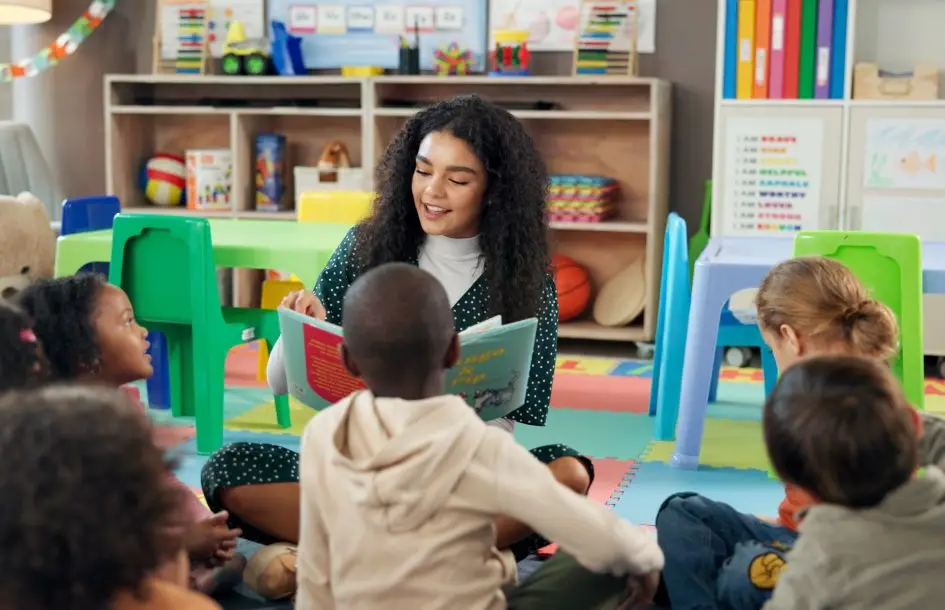

Signs of a high quality preschool program are often easier to recognize once parents know what truly matters in early childhood education. Choosing a preschool is one of the most important early decisions families make, and understanding key indicators can help parents feel more confident and informed during the search process.
Across early childhood settings, including programs such as those in Garrett Park, MD, families often find that strong preschool environments feel consistent, nurturing, and intentionally designed to support the whole child.
A high-quality preschool is more than a safe space for children, it is a structured learning environment that supports emotional, social, and academic growth through intentional teaching and play-based experiences.
Strong preschool quality indicators often include:
You can learn more about how environments shape learning in our article on How Child Care Centers Encourage Independence in Early Childhood.

One of the clearest signs of a high quality preschool program is how teachers interact with children throughout the day.
Look for classrooms where educators:
In strong early learning environments, relationships are the foundation of learning. Educators often see that children become more confident and cooperative when they feel emotionally supported.
A strong school readiness preschool program does not rely only on academics or only on play, it blends both in meaningful ways.
High-quality programs typically include learning in:
You can explore this further in our article on Why Play Is Important for Preschoolers: 6 Ways Play Supports Learning.
A key part of understanding what to look for in a preschool is recognizing whether expectations match a child’s age and stage of development.
In quality programs, children are not expected to sit still for long periods or complete advanced academic tasks. Instead, they are encouraged to:
Educators in Garrett Park, MD schools often notice that children learn best when they are allowed to progress at their own pace without pressure.

Strong communication is one of the most important preschool quality indicators for families.
High-quality programs typically:
When families feel informed and involved, children often adjust more smoothly to the classroom environment.
A strong preschool environment should feel safe, inviting, and purposeful.
Look for:
In programs such as those in Garrett Park, MD, educators often design classrooms to encourage exploration while maintaining structure and safety.
A high-quality preschool program prioritizes emotional development just as much as academic learning.
Children are supported in learning how to:
You can also explore related development in our article on How to Encourage Back-and-Forth Conversations in Preschoolers.

Predictable routines help children feel safe and confident in their environment.
Strong programs include:
These routines help children understand what comes next, which reduces anxiety and supports independence.
Understanding the signs of a high quality preschool program helps parents move beyond brochures and focus on what truly matters: relationships, environment, communication, and developmental support.
A strong preschool experience helps children build confidence, curiosity, and foundational skills that prepare them for kindergarten and beyond.
When families take time to observe classrooms, ask questions, and understand program values, they are better equipped to choose an environment where their child can truly thrive.
MCCA has been recognized by the Maryland State Legislature for its commitment to Montgomery County issued a quality programs and special needs child care Proclamation in 2016 to MCCA for its commitment to Montgomery County child care for more than 50 years. MCCA was also selected as a 2018 nonprofit finalist for a MOXIE Award for boldness and innovation
MCCA is the oldest nonprofit licensed child care provider in Montgomery County and started its work in 1968 as a Community Action Project of the War on Poverty. Recognizing the need for quality child care programs in their neighborhoods, a group of local activists formed an association to establish centers in Montgomery County that would serve a diverse population and establish high standards for child care. Now, more than 50 years later, MCCA’s dedicated and expertly trained staff continue their tradition of providing high quality child care and play-based education for children.
Families with school aged children who can afford their child care expenses during the school year often struggle to afford the all-day programs they need when school is out for the summer. The Richard Krampf Summer Adventures Scholarship Fund was established to help provide children a safe and stimulating place to spend their weeks when school is out. Please contact an MCCA Director for details on how to apply.