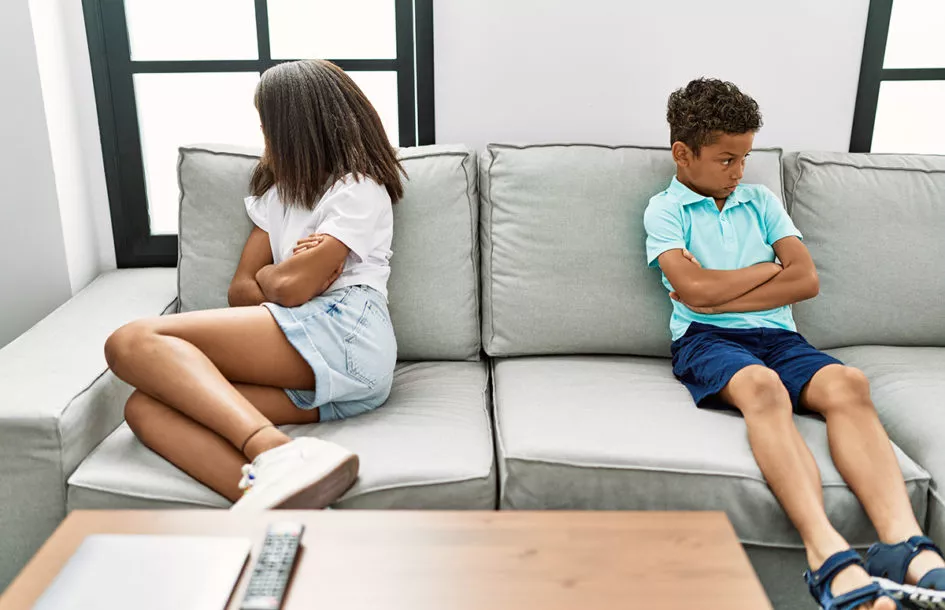

Whether it’s fighting over what to watch on TV or who gets the last cookie, listening to your kids constant bickering is exhausting. Like most parents, you are probably tired of listening to them and even more tired of being the referee. It’s easy to feel a bit worn out and overwhelmed by your kids’ ongoing disagreements.
When you have a house full of bickering children, it can be tough to figure out the real reason behind their arguments and prevent any hard feelings from sticking around. It’s possible to steer conflicts toward more positive outcomes by making little adjustments everyday.
Children often argue with their siblings because they crave their parents’ attention and may feel upset when it seems like the other child is receiving more of it. Whether it’s at home or at a Rockville day care, kids fight for various reasons—like who gets to sit next to a parent, go first, or point out when a friend does something wrong so they can say, “You got in trouble.” These conflicts often stem from jealousy and the desire to feel valued or seen as better than the other person.
The years between the ages of 8 and 12 are typically the most difficult for siblings to get along with one another. In most cases, the competition is more intense among siblings of the same gender. The intensity can increase even further if they are of similar ages or share similar interests.

If siblings are having a disagreement, take a moment to decide whether it’s a good time for you to step in or just let things be. If they’re having a little friendly disagreement, let them try to resolve it on their own. When you always impose solutions, it can lead to one or both kids feeling resentful, and they miss out on the opportunity to figure things out themselves.
Although you can’t completely eliminate sibling rivalry, you can definitely lessen its frequency. This means quieter moments from the next room and more tranquility in your home!
We live in a world that values categorizing people. We want to know who is intellectual, popular, successful, athletic, musical, gifted, etc. But when it comes to our children, labels, whether deliberate or unintentional, significantly increase competition among siblings.
When we refer to our “athletic one,” “the good eater,” “smartie,” or even our “wild child,” we unintentionally make comparisons between our children. Labeling our children unavoidably categorizes them into one or more roles, whether they like it or not, and creates comparisons among siblings.
The good news is that when we remove the labels, we let our “not-so-athletic” child shine, even if she isn’t a star. We allow the straight-B student to be proud of her hard work. And we give the “wild child” the opportunity to do the right thing.
The objective is to encourage good traits such as collaboration, perseverance, and kindness. Siblings are able to support each other rather than fight for their parent’s approval.

Do you know the best thing to do when a fight is about to start? This might surprise you: ignore it. That’s right—don’t step in. Instead, walk away and focus on something else in another room.
By ignoring the fight, you avoid reinforcing bad behavior and, most importantly, give kids the opportunity to resolve their conflict on their own. Of course, step in if the fight becomes physical or if someone needs to be stopped, but otherwise, letting them work it out independently can be incredibly beneficial.
One of the primary reasons children fight is to get their parents’ attention; in their perspective, even negative attention is preferable to nothing. Set aside 10-15 minutes of one-on-one, kid-focused time with each child daily to ensure their individual needs are met and to strengthen your bond.
Avoid distractions—put down your phone, ignore that email, and turn off the television you’re watching. For these 10 minutes, your child should be the focus of your universe, and it is vital that you are completely present.
By providing each child with this individual time, you will enhance their emotional connection and proactively fill their attention bucket with positive attention so they do not feel the need to fight with siblings to receive your attention.
If your kids are having a tough time reaching an agreement, or if things start to heat up, it might be a good idea for you to step in and help out. It’s important to stay neutral. Even if you think you know what caused the argument, avoid making any quick judgments or taking sides.
Once everyone is calm, take the time to listen to each child’s version of what happened and gently encourage them to use “I feel” statements while sharing their story. Next, gently encourage them to brainstorm solutions without assigning blame or taking sides. If nobody can find a good solution, feel free to suggest a few ideas and assist them in coming to an agreement.

If, after hearing both sides and trying to find a solution, your kids still can’t agree, it’s time for you to treat everyone equally. That means everyone involved in the discussion experiences the same outcome or consequence.
A great way to treat everyone equally is by setting clear expectations, like saying, “You’ll all take turns, or I’ll put the toy away,” or, “If you can’t agree on a show, I’ll just turn off the TV.” The key is to follow through with what you say.
Initially, there might be some complaints or attempts to negotiate, but over time, your kids will realize it’s in their best interest to work together and find a solution before they’re all held to the same consequence.
Being patient with your children is key, especially while they learn these new skills. Remember that conflict resolution is a highly advanced skill set that they are learning both at home and at their Rockville daycare. But don’t worry; with these techniques in place, you’ll be able to keep sibling rivalry and fighting under control.
Don’t be surprised if other challenges arise once sibling rivalry is resolved. The reality is that children are always finding new ways to seek attention and assert their independence. You might see mealtime drama, tantrums, backtalk, or homework battles emerge, even when siblings are getting along peacefully.
MCCA has been recognized by the Maryland State Legislature for its commitment to Montgomery County issued a quality programs and special needs child care Proclamation in 2016 to MCCA for its commitment to Montgomery County child care for more than 50 years. MCCA was also selected as a 2018 nonprofit finalist for a MOXIE Award for boldness and innovation
MCCA is the oldest nonprofit licensed child care provider in Montgomery County and started its work in 1968 as a Community Action Project of the War on Poverty. Recognizing the need for quality child care programs in their neighborhoods, a group of local activists formed an association to establish centers in Montgomery County that would serve a diverse population and establish high standards for child care. Now, more than 50 years later, MCCA’s dedicated and expertly trained staff continue their tradition of providing high quality child care and play-based education for children.
Families with school aged children who can afford their child care expenses during the school year often struggle to afford the all-day programs they need when school is out for the summer. The Richard Krampf Summer Adventures Scholarship Fund was established to help provide children a safe and stimulating place to spend their weeks when school is out. Please contact an MCCA Director for details on how to apply.