
Helping siblings get along is one of the top concerns parents have, especially when children share rooms, toys, or attention from caregivers. Sibling rivalry is normal, but with guidance, children can learn cooperation, empathy, and conflict resolution. Just as group play teaches social skills, sibling interactions provide valuable opportunities for emotional growth. By using strategies that encourage understanding and collaboration, families can reduce tension and help siblings build positive, lasting relationships.
Sibling disagreements are a normal part of growing up. Conflicts often arise over:
Sharing toys or personal space
Differences in personality or interests
Attention from parents or caregivers
At early learning centers in Silver Spring, educators notice that children who experience minor disagreements in a supportive environment often develop problem-solving skills faster. Understanding that some conflict is natural helps parents respond calmly rather than react impulsively.
Parents can:
Stay calm and model respectful communication
Validate each child’s feelings: “I see you’re upset that your brother took the toy.”
Avoid taking sides; instead, guide children toward finding a solution

Creating routines and expectations around cooperation can reduce conflict.
Set Clear Rules and Expectations: Create consistent rules around sharing, turn-taking, and personal space.
Encourage Teamwork: Collaborative activities and shared responsibilities help children practice cooperation.
Assign small household tasks as a team, like setting the table or tidying up toys
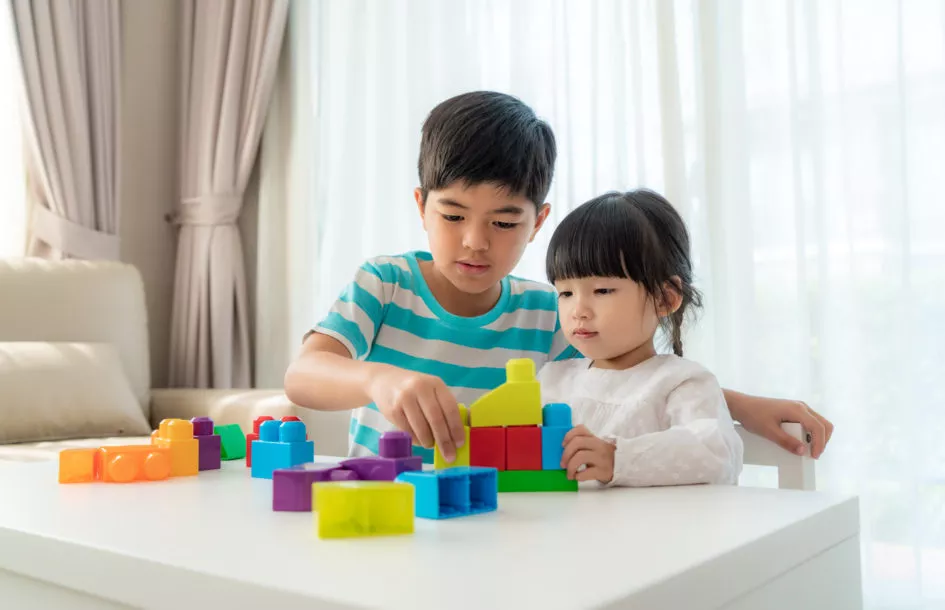
Use board games or building challenges that require turn-taking
Praise collaborative efforts: “I loved how you worked together to finish that puzzle!”
Provide Individual Attention: Schedule one-on-one time with each child to ensure everyone feels valued.
Teach Problem-Solving: Ask children, “How can you solve this together?” to empower them to resolve conflicts independently.
Preschools in Silver Spring use similar strategies, guiding children through group activities that require negotiation and teamwork, which reinforces positive sibling behavior at home.
Knowing when to intervene is key. Allowing children to solve minor disagreements teaches independence, but stepping in is necessary when:
A child becomes physically aggressive or unsafe
Arguments escalate without resolution
One child consistently dominates or bullies the other
When intervening, guide children with questions rather than commands:
“What could you do differently next time?”
“How can we share this toy, so everyone has fun?”
Silver Spring preschools often model these techniques during classroom conflicts, helping children practice conflict resolution skills in a safe environment.

Children who learn to cooperate with siblings gain skills that extend beyond the home.
Social Skills: Effective communication, empathy, and compromise
Problem-Solving Abilities: Learning to negotiate solutions independently
Confidence and Independence: Understanding they can navigate disagreements successfully
Emotional Regulation: Developing patience and self-control
Helping siblings get along is not just about avoiding fights, it’s about building lifelong skills. With consistent routines, encouragement, and opportunities for cooperative play, parents can reduce rivalry while supporting empathy, respect, and teamwork.
For more strategies on supporting social development in young children, explore our posts on How to Encourage Independent Play in Toddlers and Supporting Toddler Social Skills During Back-to-School Group Settings.
MCCA has been recognized by the Maryland State Legislature for its commitment to Montgomery County issued a quality programs and special needs child care Proclamation in 2016 to MCCA for its commitment to Montgomery County child care for more than 50 years. MCCA was also selected as a 2018 nonprofit finalist for a MOXIE Award for boldness and innovation
MCCA is the oldest nonprofit licensed child care provider in Montgomery County and started its work in 1968 as a Community Action Project of the War on Poverty. Recognizing the need for quality child care programs in their neighborhoods, a group of local activists formed an association to establish centers in Montgomery County that would serve a diverse population and establish high standards for child care. Now, more than 50 years later, MCCA’s dedicated and expertly trained staff continue their tradition of providing high quality child care and play-based education for children.
Families with school aged children who can afford their child care expenses during the school year often struggle to afford the all-day programs they need when school is out for the summer. The Richard Krampf Summer Adventures Scholarship Fund was established to help provide children a safe and stimulating place to spend their weeks when school is out. Please contact an MCCA Director for details on how to apply.