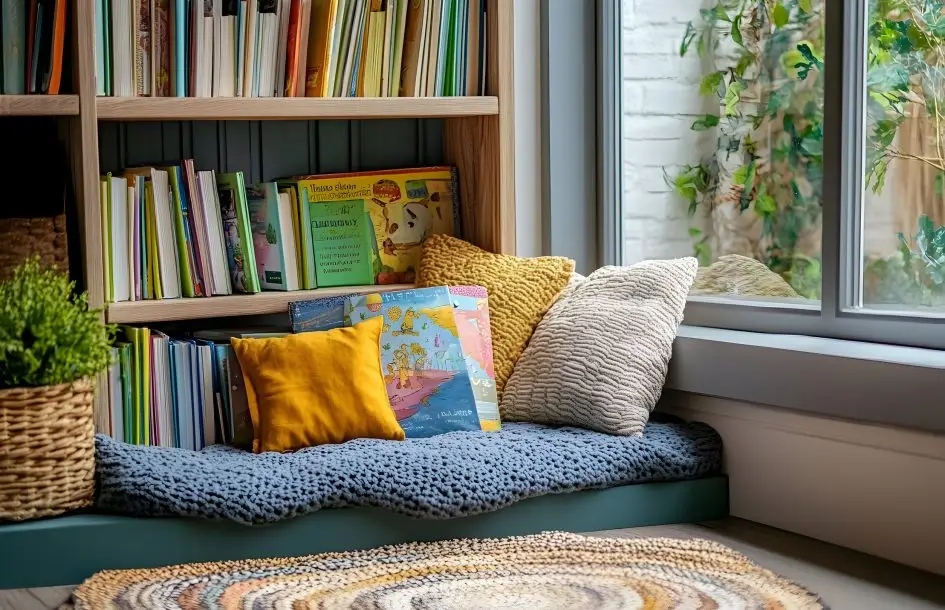

A calm corner for kids can be a powerful tool for helping children regulate emotions, reset during overwhelming moments, and build lifelong self-soothing skills. When thoughtfully put together, a calm corner becomes a safe, comforting space where children can pause, breathe, and regain a sense of control without punishment or pressure.
Parents and educators alike, such as those in Silver Spring child care centers, often use calm corners to support emotional development in a positive, nurturing way. Here’s how you can create one at home that truly works for your child.
Young children experience big emotions but often lack the language or skills to manage them independently. A calm corner gives children a consistent, predictable space to practice emotional regulation.
Research-backed early childhood strategies show that children who are taught to identify emotions and cope with stress early on develop stronger social and emotional skills. This approach aligns closely with strategies discussed in Emotional Regulation in Early Childhood, where children learn to pause, reflect, and respond rather than react.
Over time, a calm corner helps children:

The ideal calm corner for kids is quiet, cozy, and slightly removed from high-traffic areas. It doesn’t need to be large, just consistent.
Good locations include:
In many Silver Spring child care centers, calm spaces are intentionally placed where children can still feel connected without being overstimulated.
Soft, familiar items help children relax both physically and emotionally, such as:
These comfort elements mirror what many educators use when creating Quiet Time Activities for Preschoolers to support rest and emotional reset.

Sensory items help children ground themselves and release stress in healthy ways:
Sensory play is especially effective for younger children who process emotions physically before verbally.
Children benefit from visual cues that help them understand what they’re feeling:
These tools reinforce the emotional skills children often practice through Social-Emotional Learning in Preschool settings.
A calm corner for kids should always be optional, not forced. Encourage its use:
It’s especially effective when paired with predictable daily routines, which support emotional stability and security.
Consistency is key. Children thrive when calming strategies are part of daily life, not just moments of distress. Families who build calm corners into routines often notice smoother transitions and fewer emotional outbursts.
This approach aligns closely with the benefits described in The Benefits of Consistent Routines for Children of all Ages, where repetition and predictability help children feel safe and confident.

A calm corner for kids should evolve over time:
Just as educators adapt learning environments in Silver Spring child care centers, parents can adjust calm spaces to match developmental needs.
A calm corner is a skill-building tool, not a quick fix.
Creating a calm corner for kids is a simple, yet powerful way to support emotional growth at home. With consistency, patience, and encouragement, children learn that big feelings are manageable and that they have safe tools to help themselves through challenging moments.
Families and educators alike, including those in Silver Spring preschools, see firsthand how calm spaces empower children to grow emotionally strong, resilient, and confident.
MCCA has been recognized by the Maryland State Legislature for its commitment to Montgomery County issued a quality programs and special needs child care Proclamation in 2016 to MCCA for its commitment to Montgomery County child care for more than 50 years. MCCA was also selected as a 2018 nonprofit finalist for a MOXIE Award for boldness and innovation
MCCA is the oldest nonprofit licensed child care provider in Montgomery County and started its work in 1968 as a Community Action Project of the War on Poverty. Recognizing the need for quality child care programs in their neighborhoods, a group of local activists formed an association to establish centers in Montgomery County that would serve a diverse population and establish high standards for child care. Now, more than 50 years later, MCCA’s dedicated and expertly trained staff continue their tradition of providing high quality child care and play-based education for children.
Families with school aged children who can afford their child care expenses during the school year often struggle to afford the all-day programs they need when school is out for the summer. The Richard Krampf Summer Adventures Scholarship Fund was established to help provide children a safe and stimulating place to spend their weeks when school is out. Please contact an MCCA Director for details on how to apply.