
Long summer afternoons are made for movement. Setting up a backyard obstacle course is an easy, low-cost way to keep kids active, engaged, and full of giggles. With just a few simple supplies, you can create a play space that encourages gross motor skills, confidence, and creative problem-solving; just like the kinds of activities found at a preschool in Silver Spring or during outdoor time at early learning centers.
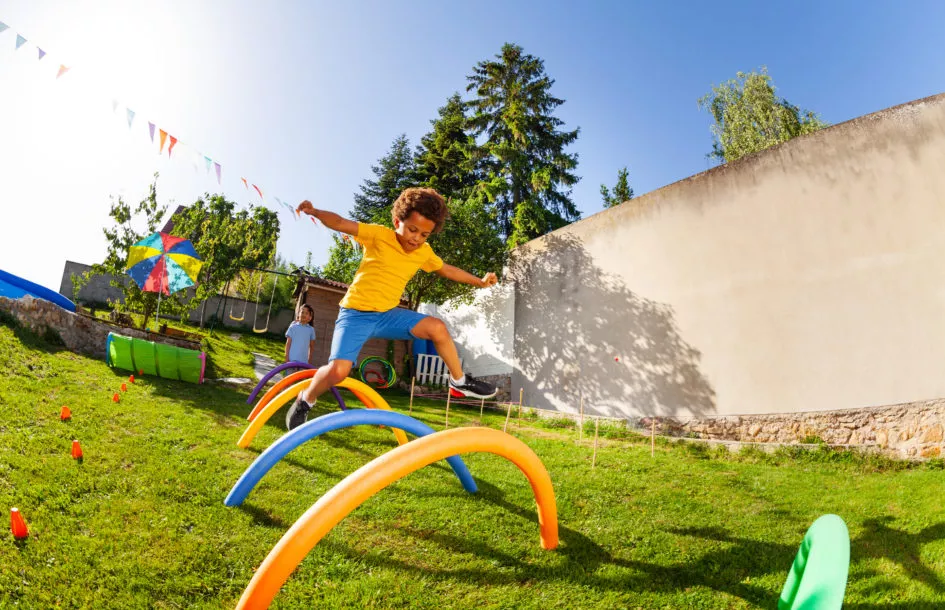
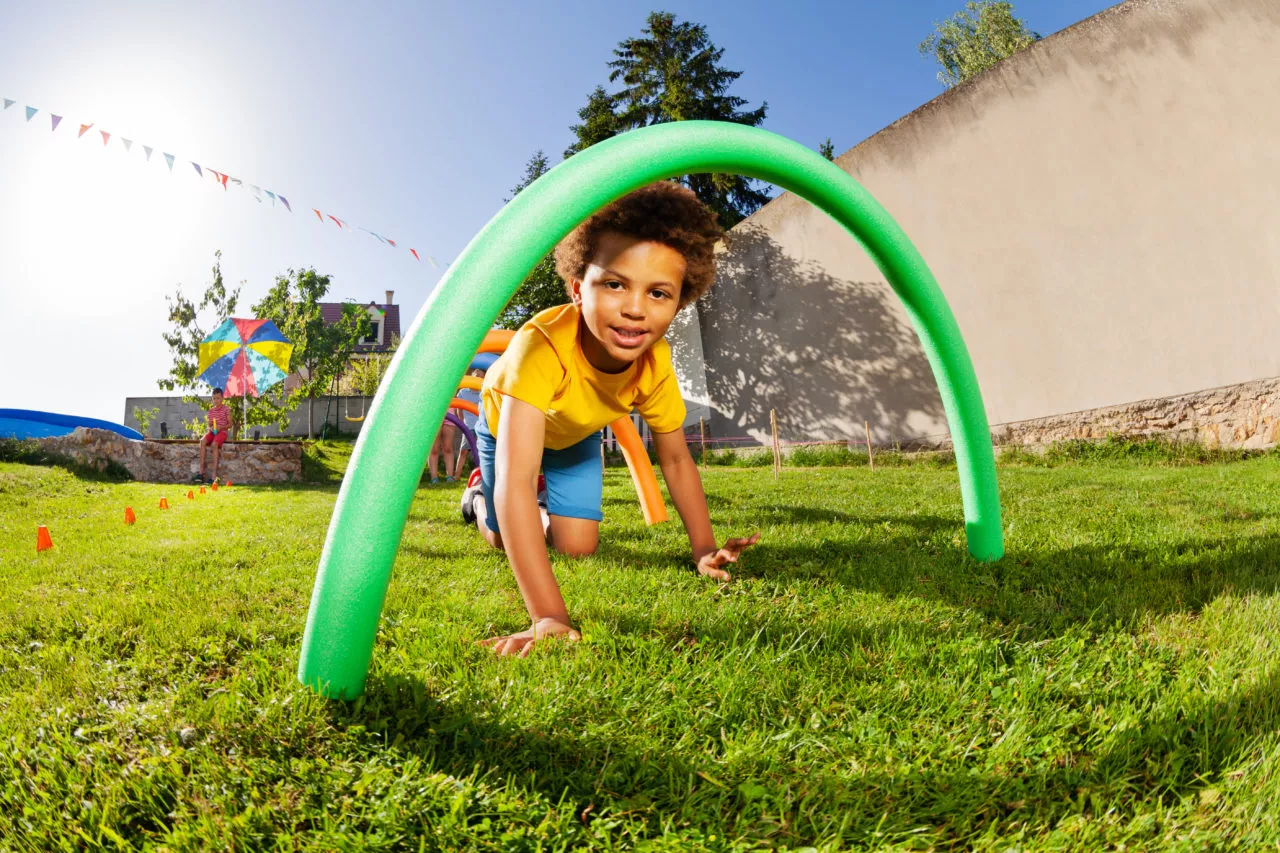
Start with what you already have! Use pool noodles for hurdles, hula hoops for jump-through rings, cardboard boxes for tunnels, and cones or buckets for zigzag paths. Add chalk to draw balance lines or number steps. A mix of climbing, crawling, hopping, and balancing creates a full-body experience.
Obstacle courses aren’t just fun; they support coordination, spatial awareness, and executive function. Children learn to plan their next move, follow multi-step directions, and stay focused. This kind of active play also improves muscle strength, flexibility, and endurance.
At early childhood programs like this Silver Spring location, gross motor activities are woven into the daily rhythm, helping kids gain physical confidence and body awareness in safe, structured ways.
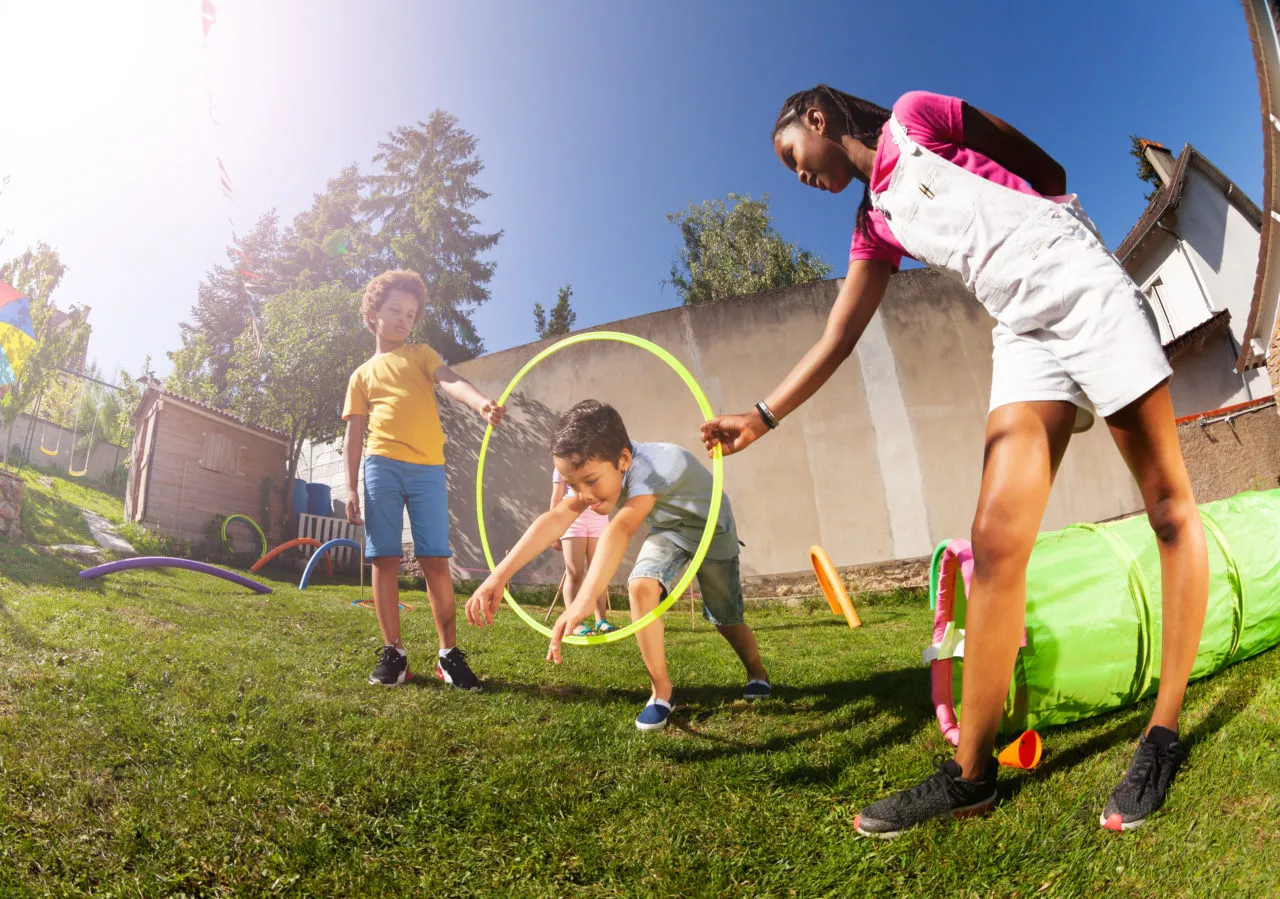
For toddlers, keep it simple: crawling under a blanket tunnel, tossing bean bags into a bucket, or stepping over low objects. Preschoolers can handle more challenges: hopscotch squares, a balance beam made from a 2×4, or “lava” zones to jump over.
Make it a game! Use a timer to “beat the clock,” play music for a freeze-dance twist, or have kids take turns creating new course paths. Cheer them on and let them try again when challenges feel tough; resilience is part of the fun.
Supportive encouragement, like what children experience at this Rockville preschool, helps build persistence and a positive attitude toward active challenges.
Absolutely. Invite siblings or friends to complete the course as a relay, or take turns timing and guiding each other. Shared goals and cooperative play foster communication, patience, and turn-taking—all valuable social-emotional skills. Obstacle courses can help children learn how to work and play together while building friendships.
Obstacle fun doesn’t have to stop when the weather changes. Try creating an indoor course using couch cushions, masking tape lines, laundry baskets, and tunnels made from chairs and blankets. Keep safety in mind by clearing space and using soft materials.
DIY obstacle courses are more than just a fun activity; they’re a smart way to support healthy development across multiple domains. From physical strength to cognitive planning, these engaging setups mirror the active learning that takes place in high-quality early education programs. And best of all, they’re customizable, screen-free, and full of joyful moments.
Want more creative ways to support your child’s learning at home and beyond?
Getting Active: Fun Sports and Outdoor Activities for School-Age Children and Building a Summer Bucket List: Activities for the Whole Family.
MCCA has been recognized by the Maryland State Legislature for its commitment to Montgomery County issued a quality programs and special needs child care Proclamation in 2016 to MCCA for its commitment to Montgomery County child care for more than 50 years. MCCA was also selected as a 2018 nonprofit finalist for a MOXIE Award for boldness and innovation
MCCA is the oldest nonprofit licensed child care provider in Montgomery County and started its work in 1968 as a Community Action Project of the War on Poverty. Recognizing the need for quality child care programs in their neighborhoods, a group of local activists formed an association to establish centers in Montgomery County that would serve a diverse population and establish high standards for child care. Now, more than 50 years later, MCCA’s dedicated and expertly trained staff continue their tradition of providing high quality child care and play-based education for children.
Families with school aged children who can afford their child care expenses during the school year often struggle to afford the all-day programs they need when school is out for the summer. The Richard Krampf Summer Adventures Scholarship Fund was established to help provide children a safe and stimulating place to spend their weeks when school is out. Please contact an MCCA Director for details on how to apply.